
Throwback Thursday: Training the Special Forces in UAE
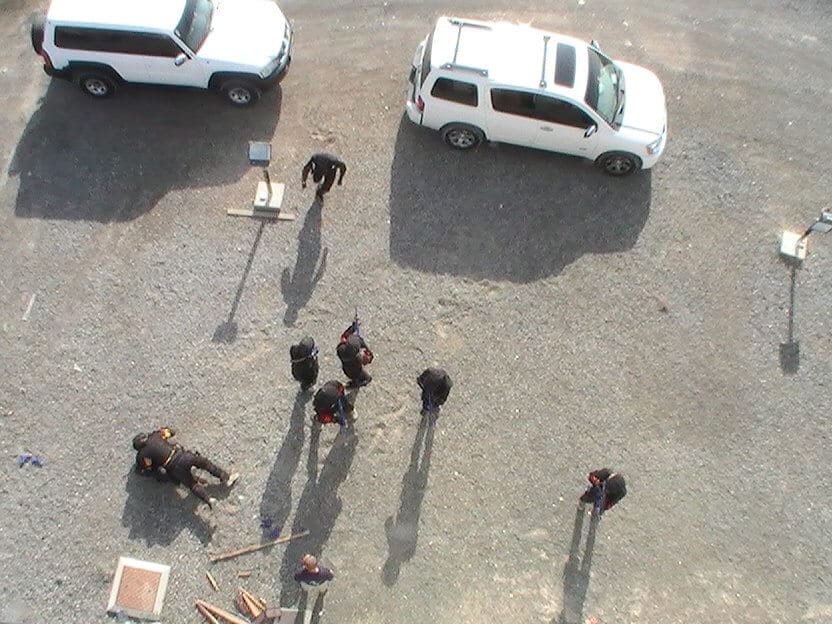
Some years ago we were asked, because of the common technology shared by our trainers (the “9 Attitudes” framework and our Behavioural Self-Protection training methodology) to put together a team of experienced police and tactical trainers for a project in the UAE. A client with a specific requirement to train their operators to enter buildings and […]
Case Study: Foster Carers Training
Foster Carers Training in Managing Challenging Behaviours and Physical Intervention Foster Carers Training Project: a foster agency, contracted to the local authorities in its area, was receiving requests from its foster families to have training in the use of physical interventions. Families wanted clarity on the rules regarding this area and asked us for Foster […]
National Personal Safety Day – Lone Working Book from Dynamis
Lone Working Personal Safety – A guidebook for health and social care workers will give you practical and largely unexplored personal safety advice which will inform and enhance how you make decisions. It will also widen the discussions you have within your team about how you as a group can improve your personal safety systems. […]
Case Study: Learning Disability Home Care
Learning Disability Home Care Training for the Support Team in Managing Challenging Behaviours. Learning Disability Home Care Case: 11-year old boy with a brain injury and learning disabilities. Who engaged Dynamis: The Case-Manager who administrates and supervises the care-package being delivered to support the client at home with his family. Why Dynamis was asked to help […]
Throwback Thursday: Emergency Response Belt demonstrations in Dubai
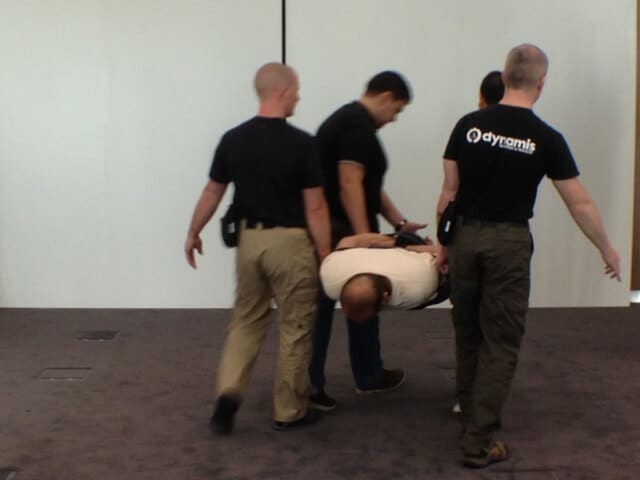
Back in 2013, my team and I had the opportunity to demonstrate the use of the Emergency Response Belt to our healthcare authority clients in Dubai. With a very busy Emergency Department, taking hundreds of cases every day, the staff were sometimes having to deal with very upset, frustrated and distressed psychiatric patients presenting at […]
Case Study: Training for Drug and Alcohol Support teams
Drug and Alcohol Support Team: Personal Safety and De-Escalation Training Drug and Alcohol Support Team Case: A team of hostel supported-living staff were experiencing a variety of aggressive and sometimes violent behaviour from service users with chaotic lifestyles. Who engaged Dynamis: The Drug and Alcohol Support team service manager had engaged Physical Intervention training some […]
Hospital Violence Reduction and SCARF Triggers
Hospital Violence Triggers Hospital Violence Triggers for Conflict or Crisis In a recent MORI opinion poll patients indicated that they want to feel a close presence of clinical staff and to receive better communication from staff. “Information is crucial – lack of information contributes to anxiety and discomfort of patients and carers who are […]
Case Study: Mental Health Unit Restraint Reduction Training
Mental Health Unit training in Violence Reduction and Restraint Minimisation Mental Health Unit Case: an ‘open’ psychiatric unit with separate male and female wards, delivering services in a highly multi-cultural/multi-ethnic/multi-national environment. Who engaged Dynamis: the nurse-manager in charge of the psychiatric unit initially wanted his own staff trained, and ultimately also included members of the emergency […]
Throwback Thursday: Restraint Chair in Oman
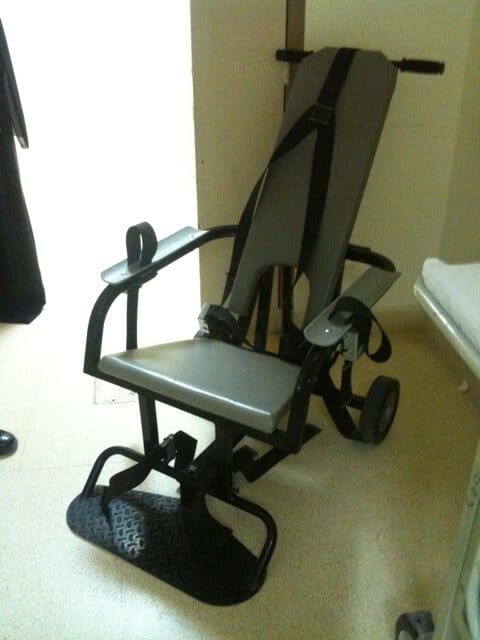
During a trip to the middle east back in 2010 to visit with a number of psychiatric institutions and hospitals to give advice and training, I recall being shown the ‘restraint chair’ in the picture at one of the units I visited. I remember being quite surprised at the sight. Even though I was aware of […]
Hospital Violence Reduction – Ambassador Programmes
Hospital Violence Programmes and the provision of Information to provide Clarity On entering A&E people want more information on the following: initial expected waiting times; changes to expected waiting times; reasons for changes (for example, intake of serious road traffic accidents); alternatives to A&E (where they can get treatment instead); their condition and priority in […]