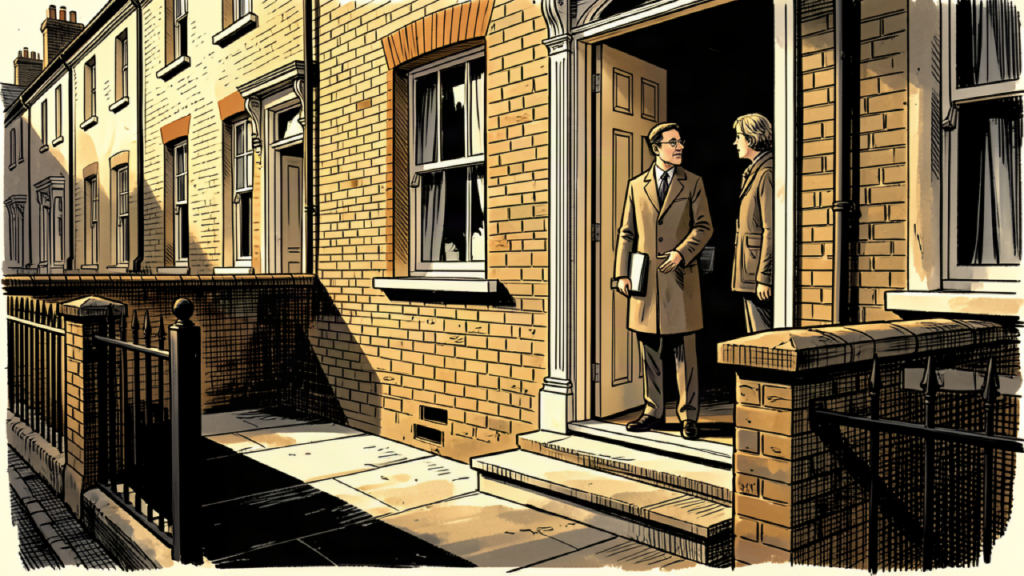
For outreach, community health and small charity teams who visit people at home or on the street. The training builds the judgement to read a doorstep and a way out when a visit turns difficult.
Any physical response has to be lawful, necessary and proportionate, and reached only once everything verbal has failed.
Our training standard
Skills for the walk to the door
Staff learn to plan a visit before they leave the office, decide at the threshold whether to go in, and keep a way out while they are inside. They also get a shared way to check in, hand over and debrief, which matters when the team is three people.
01
Pre-visit risk assessment
02
Doorstep judgement
03
Exit planning inside a flat
04
Check-in and alerting protocol
05
Setting limits during a visit
06
Trauma-aware conversations
07
Debrief after a hard visit
08
Handover between agencies
What small teams ask of training
Someone to call at the door
Scenarios from their own visits
Plain language across partners
Support after a difficult visit
Training sized for a small team
Scenarios come from the visits your team actually makes, and the decisions inside them are rehearsed, not described.
It starts with one conversation about your caseload: who you visit, where, and which visits people dread. From there the training is built around your patch rather than a generic syllabus.
01
We go through the caseload with you: which addresses are hard, which referrals arrive without warning, and where a worker has no signal on their phone.
Map the visits
Map the visits
We go through the caseload with you: which addresses are hard, which referrals arrive without warning, and where a worker has no signal on their phone.
02
Staff practise the doorstep, the front room and the exit in the order they happen, using scenarios drawn from your referrals. They say the words aloud, then repeat them.
Rehearse the visit
Rehearse the visit
Staff practise the doorstep, the front room and the exit in the order they happen, using scenarios drawn from your referrals. They say the words aloud, then repeat them.
03
The skills go into routines the team already keeps: the pre-visit check, the check-in call, the handover note, the meeting where a hard visit gets talked through.
Embed in the week
Embed in the week
The skills go into routines the team already keeps: the pre-visit check, the check-in call, the handover note, the meeting where a hard visit gets talked through.
04
We look at what changed in the records and in supervision, and where staff still hesitate. The next round of training is set by what that shows.
Review the visits
Review the visits
We look at what changed in the records and in supervision, and where staff still hesitate. The next round of training is set by what that shows.
Local authority training: what council teams taught us
What council teams taught us about conflict management and lone working, and what changes when training is built from the visits officers actually make....