For field engineers, metering and maintenance crews who work alone at a customer’s door. It covers the part of the job no procedure reaches: the first minute, the refusal, and the decision to leave.
Every visit is risk assessed before it starts, and the engineer has authority to leave when the risk changes.
Our training standard
What engineers can do after training
Engineers leave able to read a doorstep in the first minute, hold a conversation with someone frightened about a bill, and end the visit without a struggle. Team leaders leave with a briefing they can run before a shift.
01
Doorstep risk assessment
02
Reading distress before threat
03
De-escalating a billing dispute
04
Refusing access and withdrawing
05
Lone worker check-in discipline
06
Reporting that stands up later
07
Debrief and return to work
08
Supervising dispersed engineers
What operations managers ask for
Training that fits around shifts
One standard for every crew
Scenarios built from real visits
Respect for engineers' judgement
Evidence an inspector can read
Scenarios are built from the visits your engineers actually make, then run at the pace of a real doorstep.
We start with the visits that go wrong: the addresses crews avoid, the jobs that end in a call for help, the reports written days afterwards. The syllabus is built with your operations managers.
01
We read incident and no-access reports, join engineers on visits, and ask which doors they would rather not open. The pattern shows in the data before anyone names it.
Diagnose
Diagnose
We read incident and no-access reports, join engineers on visits, and ask which doors they would rather not open. The pattern shows in the data before anyone names it.
02
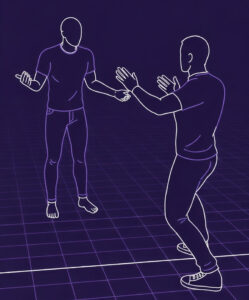
Engineers practise at a mocked-up front door: the reading disputed, the cupboard blocked, the dog in the hall, the customer who follows them to the van. Short scenarios.
Training
Training
Engineers practise at a mocked-up front door: the reading disputed, the cupboard blocked, the dog in the hall, the customer who follows them to the van. Short scenarios.
03
Team leaders run short briefings before shifts in the same words as the course, and new starters and subcontractors get the induction before a solo visit.
Embedding
Embedding
Team leaders run short briefings before shifts in the same words as the course, and new starters and subcontractors get the induction before a solo visit.
04
After each cohort we sit down with the incident and near-miss log, compare it with what engineers describe, and change scenarios where the pattern has moved.
Evaluate
Evaluate
After each cohort we sit down with the incident and near-miss log, compare it with what engineers describe, and change scenarios where the pattern has moved.
Dynamis reworked the 9 Attitudes instructor course and runs it at Loughborough from 24 to 26 November 2026. Three days cover attitudes, high-risk control tactics and edged weapon protection, with places limited to 14....