
A complexity ladder takes one scenario you already run and makes it harder, one rung at a time.
Most trainers have one good scenario and a room full of learners at different stages. The temptation is to design a second scenario, then a third, and end up with three stories and no progression. The cheaper option teaches more: keep the scenario, and climb a ladder with it.
The coaching tip
Use several increasingly demanding versions of the same scenario. Progression should feel like climbing a ladder, not being pushed off a cliff.
How to try it
Start with a calm, clear and manageable version. On the next repetition, change one meaningful feature only: the emotional level, the space available, the time pressure, the ambiguity, or the presence of another person. Then watch the learner’s response before deciding whether to climb, stay on the same rung, or step back down.
That last part is the discipline. A complexity ladder is not a schedule. It is a decision you make from what you have just seen.
Why the complexity ladder helps learning
The right level of challenge builds competence and confidence together. Push too fast and learners practise panic, freezing or unsafe habits, and they practise them well. Never push at all and they can perform smoothly without becoming adaptable. A visible ladder also lets you individualise: two learners can sit on different rungs of the same story without anyone feeling singled out.
Three examples
Schools: run a refusal-to-leave scenario first with a quiet pupil, then with raised emotion, then with peers watching. Same learning purpose, higher social and emotional demand.
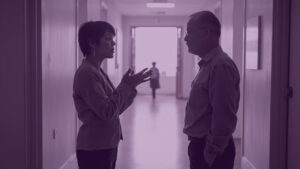
Lone workers: begin with a cooperative resident, add frustration next, then introduce a second person entering the hallway. One feature changes at a time, so the learning stays visible.
Officer safety: begin with a cooperative stop and search, add verbal challenge, then a distracting bystander. Do not add noise, time pressure and a second subject at once. That is three rungs in one step.
Why it is SCENA
SCENA is scenario-based, coaching-led and non-linear, and the ladder is where those three meet. The whole scenario gets progressively more complex, the coaching responds to what the learner actually does, and assessment happens while they work rather than afterwards.
One experiment for your next course
Take a scenario you already use. Write five versions of it, one line each, changing a single feature per version. Then decide, live, which rung each learner gets to today.
What is the smallest change you could make to a scenario you already run that would move it up one rung?
Progression should feel like climbing a ladder, not being pushed off a cliff.
Related reading and training
- Train the trainer
- SCENA: scenario-based training
- Start with the scenario, not the explanation
- Teach in slices of the whole task