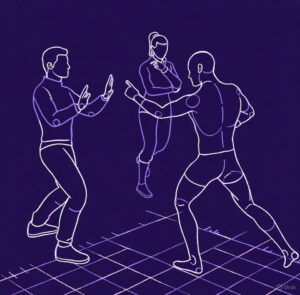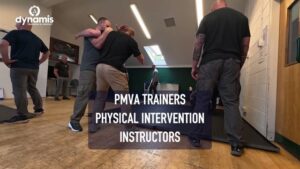

This post is about nhs breakaway training. Breakaway training in the NHS has to hold two truths at the same time.
Staff have the right to be safe at work.
Patients are often distressed, unwell, confused, frightened, intoxicated, in pain, or experiencing a mental health crisis when incidents happen.
Those two truths belong together.
Staff have the right to be safe at work. Patients are often distressed, unwell, confused, or frightened. Those two truths belong together.
Good training does not minimise the risk to staff. It also does not forget the clinical context of the person whose behaviour has become unsafe.
A breakaway is a release from a grab, hold, block, or physical contact when the staff member needs to get free and move to safety. It should be simple, proportionate, and focused on escape rather than control.
But the release itself is only one part of the work.
A breakaway is a release from a grab, hold, or physical contact — but the release itself is only one part of the work.
NHS staff also need to recognise the build-up, use de-escalation where possible, call for support early, understand the legal and clinical framework, and know what to do afterwards.
Why NHS breakaway is different
In many public-facing roles, a conflict may happen between strangers. In healthcare, the person may be a patient in the staff member’s care.
That changes the emotional and professional meaning of the incident.
A patient may grab a wrist during personal care because they are frightened. A confused older person may push staff away because they do not understand what is happening. A person in acute distress may block a doorway, hold clothing, or lash out. A visitor may become aggressive because they are scared or angry.
The staff member still needs to be safe. They may need to release and withdraw immediately. But they also need training that fits the healthcare context, not a generic self-defence model.
Breakaway in healthcare must be:
- Clinically aware
- Low force
- Focused on escape
- Legally defensible
- Sensitive to vulnerability
- Connected to de-escalation and aftercare
- Practised in realistic environments
The build-up matters
Breakaway training often begins too late.
The physical release is taught as if the first important moment is the grab. In reality, the staff member may have had several earlier opportunities to reduce risk.
Before physical contact, there may have been signs:
- Increased agitation
- Repeated questioning
- Confusion or fear
- Resistance to care
- A person moving too close
- Hands becoming more active
- A visitor’s tone changing
- A patient scanning for exits
- Staff feeling rushed or unsupported
Training should help staff recognise these early signs and act before contact occurs.
That might mean creating more space, reducing verbal demands, involving a colleague, changing the staff member leading the interaction, pausing care, explaining differently, or leaving and returning when safer.
The best breakaway is the one that is not needed because staff saw the risk early.
When a breakaway is needed
There are still times when staff need to get free quickly.
A patient grabs hair, clothing, a wrist, or an ID badge. A visitor blocks a doorway. A staff member is held while another person moves closer. Someone tries to pull the worker into a room or prevent them leaving.
The staff member needs a simple sequence:
- Stay as calm as possible.
- Protect balance and breathing.
- Create an angle or reduce the hold.
- Release using the least force necessary.
- Move to a safer position.
- Call for support.
- Reassess rather than re-engage automatically.
Under stress, complex techniques are unlikely to transfer. NHS breakaway training should prioritise simple movements that can be practised safely and repeated often.
The goal is not to overpower the person. The goal is to get free and reduce harm.
Clinical risk must shape the training
Healthcare staff work with people whose physical and mental state may make any physical response more risky.
Training should consider:
- Frailty
- Dementia or delirium
- Learning disability
- Autism
- Trauma history
- Pregnancy
- Recent surgery
- Pain
- Intoxication or withdrawal
- Medication effects
- Respiratory or cardiac conditions
- Medical devices, lines, catheters, or wounds
A technique that might be low risk in a generic workplace could be inappropriate in a clinical setting.
Staff need to understand that breakaway is not just a physical action. It is a clinical judgement about how to protect themselves while avoiding unnecessary harm to the patient.
The legal and professional framework
Staff do not need to become lawyers, but they do need clear principles.
Any physical response must be lawful, necessary and proportionate. Staff should understand duty of care, reasonable force, health and safety responsibilities, human rights considerations, mental capacity, safeguarding, and local policy.
The key practical question is:
Can I explain why this action was necessary at that moment, and why it was no more forceful than it needed to be?
Training should help staff answer that question in plain language.
This protects patients, staff, and the organisation.
Breakaway should be taught with de-escalation, not instead of it
Breakaway training that only teaches physical release can accidentally send the wrong message.
Staff may leave knowing how to get free, but not how to reduce the chance of being grabbed. They may become more confident physically, but no better at recognising distress, adjusting approach, or using the team.
A credible programme combines:
- Early recognition
- Communication
- Positioning
- Personal space
- Safe exit routes
- Calling for help
- Physical release
- Withdrawal and reassessment
- Reporting and aftercare
The release is one part of a safer sequence.
Practising in the real environment
A ward, clinic, waiting room or patient bedroom does not feel like a training hall.
There may be beds, chairs, trolleys, equipment, relatives, alarms, wet floors, narrow doors, medical devices, and other patients nearby.
Training should include realistic conditions where possible. Staff need to practise how to keep an exit available, where to stand during personal care, how to avoid being trapped between a patient and furniture, and how to call support when hands are full.
Short, repeated workplace practice is often more useful than a long annual course.
After the incident
A breakaway may be brief, but it still needs review.
After an incident, staff should:
- Check their own safety and injuries
- Check the patient’s wellbeing
- Call for clinical review if needed
- Record what happened clearly
- Identify what preceded the contact
- Review whether the care plan needs updating
- Receive support if the incident was distressing
- Learn as a team
The review should not simply ask whether the technique worked. It should ask why the staff member needed to use it and what could reduce the chance of the same situation happening again.
That is how breakaway training supports violence reduction rather than becoming a repeated emergency response.
Common weaknesses in NHS breakaway provision
The first weakness is generic training.
NHS breakaway cannot be copied wholesale from retail, security, or general workplace personal safety. The clinical setting changes the risk.
The second weakness is annual-only refreshers.
Skill fades. Confidence becomes unreliable. Staff need ongoing practice, especially in higher-risk areas.
The third weakness is technique without judgement.
Staff may know a release but not when to use it, when to withdraw, or how to explain the decision afterwards.
The fourth weakness is poor connection to incident data.
If the same types of grabs or assaults are happening repeatedly, training should be adjusted around those patterns.
A practical first step
Review the last 12 months of staff assault, grab, and near-miss reports.
Look for:
- Where incidents happen
- What task was being done
- Whether staff were alone
- What the person’s presentation was
- What happened before contact
- Whether staff could exit
- Whether support arrived quickly
- What changed afterwards
Then build short practice sessions around the most common situations.
If most incidents occur during personal care, train that. If they occur at reception, train that. If they occur during observations, transfer, medication, or waiting-room interactions, train those moments.
⚠️ Common pitfall: Generic breakaway training that does not reflect real clinical scenarios. If most incidents occur during personal care, train that. If they occur at reception, train that. Scenario-led practice where staff recognise context, use communication, and apply releases that are low-force and role-appropriate.
What good looks like
Good NHS breakaway training helps staff feel safer without making care more defensive.
Staff learn to recognise risk earlier, communicate more clearly, position themselves better, release safely if needed, and recover properly afterwards.
The patient remains a person in care, even when their behaviour becomes unsafe. The staff member remains entitled to protection, even when the patient is distressed.
A good programme honours both.
If you would like to review NHS breakaway training for your team or service, we can help you examine the real incidents, adapt training to the clinical environment, and build practical sessions that support staff safety and patient dignity.