
PMVA Training for Healthcare
Practical 3–5 day training in prevention, de-escalation, personal safety and last-resort protective interventions, tailored to your healthcare setting.
Prevention First
Dignity Throughout
Coordinated Responses
Lasting Capability
In short
PMVA training means prevention and management of violence and aggression: practical training in prevention, de-escalation, personal safety and last-resort protective interventions for healthcare teams. It runs for 3 to 5 days and is tailored to your setting.
Reviewed 31 October 2026 · Speak to our team
When care becomes difficult
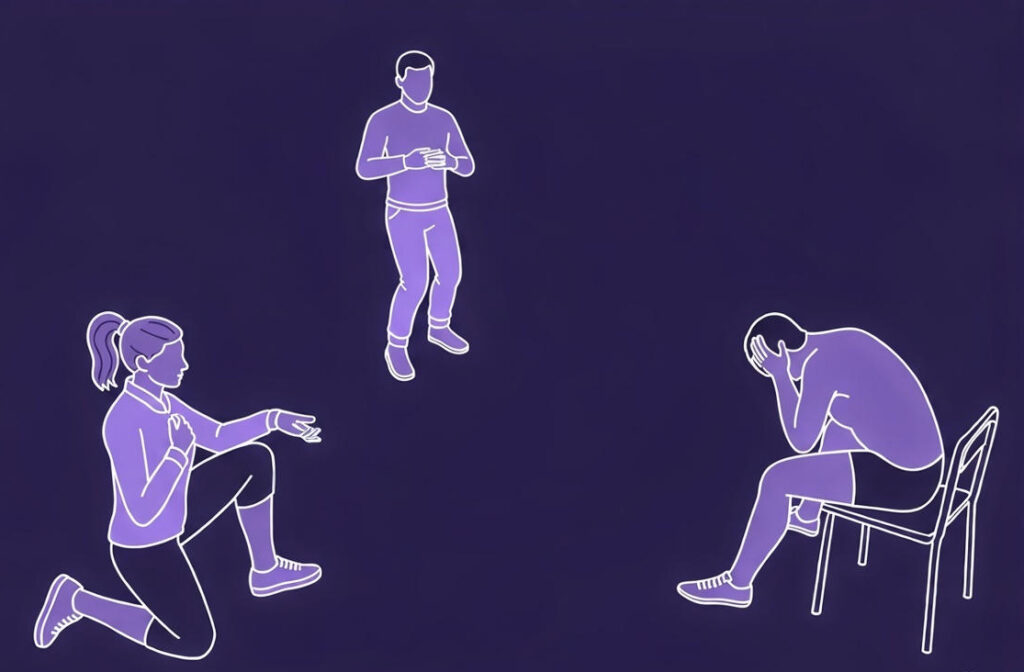
A patient becomes frightened during personal care. Someone in the emergency department feels ignored and begins threatening staff. A person on a mental health ward becomes increasingly distressed while other patients gather nearby.
Your team needs more than a collection of holds. They need to recognise what is happening, communicate without adding pressure, and decide when to step back, call for help or take protective action.
01
Prevention
Understand individual needs, recognise triggers and improve the conditions in which care takes place.
02
Early intervention
Respond to distress, use de-escalation and support people before risk becomes an emergency.
03
Protective response
Disengage or intervene when necessary, using the least restrictive lawful option and ending restriction as soon as it is safe.
Why professionals choose Dynamis
Practitioner-designed content, with clinical and legal review behind the syllabus, built around the encounters your team actually faces.
Expert led
Practitioner-designed content, with clinical and legal review behind the syllabus.
Scenario based
SCENA: scenario-based, coaching-led, non-linear learning with assessment for learning.
Legally sound
Necessity, proportionality and least-restrictive decision-making practised, not just described.
Skills that stick
Coached repetition, assessment and refresher planning beyond the training room.
Course Outline & Goals
Equip healthcare staff with the knowledge, understanding and practical skills to prevent and manage violence and aggression, protect dignity, reduce restrictive practice and respond proportionately when there is a risk of harm.
Modules 1–2
Staff explore the person behind the behaviour and practise the first approach that changes the direction of an encounter.
- Baseline behaviour, triggering cues, and the phases of crisis, recovery and re-entry
- Unmet needs, positive behaviour support and person-centred care planning
- Trauma history, perceived threat, stress responses and perceptual narrowing
- Adapting communication for cognitive impairment, dementia, delirium and learning disability
- Tone, body language, positioning, redirection and meaningful options
- Responding to abuse, threats, complaints and refusal
Module 3
Staff practise explaining not just what they did, but why it was necessary.
- Duty of care for patients, colleagues and others
- Human rights, equality, mental capacity and mental health law
- Lawful authority, honest belief, necessity and proportionality
- Recognising restraint and restrictive practice, including clinical holding
- Withdrawal, containment and seclusion, including their safeguards
- Reporting, safeguarding, aftercare and duties of candour
Modules 4–5
Protecting yourself and creating space without turning disengagement into an unnecessary restraint, then lower-level contact with a lawful justification.
- Stance, movement, balance and protective frames; protection from head impacts
- Disengagement from wrist, clothing and hair grabs, body grabs, bear hugs, throat grabs and headlocks
- Responses to biting and kicking; two-person breakaway and team disengagement
- Prompting, guiding and escorting, front and rear approaches
- Humerus contact and control, clothing grips, wrist and straight-arm holds
- Seated guidance, kneeling adaptations, coordinated release and stepping down restriction
Module 6
Where the needs analysis identifies a role for higher-risk interventions, teams practise coordinated responses with explicit attention to clinical risk and earliest release.
- Arm-wrap and protective-frame interventions
- Team assistance when a colleague is at risk
- Higher-risk seated stabilisation; emergency wall stabilisation
- Emergency floor stabilisation and transitions
- Clinical holding on a bed, and with a Safety Pod where approved
- Vehicle intervention, seclusion entry and exit for authorised services
These are specialist components, not blanket permissions. Inclusion depends on service policy, lawful authority, clinical governance, staffing, equipment and demonstrated competence.
Modules 7–8
The risks that make restraint a last resort, and the duties that follow it.
- Positional and compressional asphyxia; high-risk positions to avoid
- Warning signs of deterioration, monitoring, clear team roles and escalation
- Ending or adapting an intervention when safety requires it; recovery positioning and observation
- Supporting physical recovery, identifying injuries and restoring dignity
- Recording observable facts, timings, risks and alternatives attempted
- Reporting, safeguarding, candour and reviewing incidents to improve care plans
Who it is for
Staff whose work carries a foreseeable risk of violence
Nurses, healthcare assistants, support workers, allied health professionals, security staff and clinical leaders. The physical content follows the role, the patient group and the assessed risk.
- Mental health wards & PICU
- Emergency & acute
- Learning disability
- Older people & dementia
- Community teams
- Transport & secure escort
- Course
- PMVA for Healthcare
- Duration
- 3–5 days, set by training needs analysis
- Delivery
- In-house, scenario-driven, coached practice
- Assessment
- Observed practice and a written record of competence
- From
- £99 per learner, most teams
What staff know, understand and can do
Learning outcomes apply to the techniques and specialist procedures actually taught and assessed, not every option listed in the wider syllabus.
01
Know
- The phases of crisis and recovery
- The legal requirements governing intervention
- The difference between support, restraint, clinical holding and seclusion
- Responsibilities for monitoring, aftercare and review
02
Understand
- How trauma and perceived threat shape an encounter
- When a person needs clinical assessment rather than persuasion
- Why a familiar technique may be unsuitable for a patient or space
- How culture and incident learning reduce restraint
03
Be able to do
- Recognise change and respond before risk escalates
- De-escalate and adapt communication to need
- Assess risk, call for assistance and coordinate roles
- Release at the earliest safe opportunity and record factually
Why 3–5 days?
Course length follows the assessed need, not a fixed collection of techniques. The full PI-Lo and PI-Hi range is not compressed into a three-day course by reducing practice time.
01
Three days
A defined core programme combining prevention, communication, legal decisions, personal safety and the agreed protective skills.
02
Four days
Additional practice and assessment for teams requiring a broader intervention repertoire or more complex clinical scenarios.
03
Five days
An extended programme for higher-risk teams, with greater depth in coordinated responses, specialist procedures and integrated assessment.
What good PMVA training changes
“If the training makes staff better at holding people but no better at preventing the need to hold, the programme is incomplete.”
The principle behind every Dynamis PMVA programme
We Support You


How It Works
Three clear steps

ASSESS
Review your incidents, patient population, policies, environment and staff responsibilities.

TRAIN
Build and assess the skills your team needs through coached, relevant practice.

SUSTAIN
Agree reinforcement, refresher training and review arrangements that maintain capability.
How should training impact be measured beyond satisfaction scores?

Frequently Asked Questions
Is PMVA training mainly about restraint?
No. Prevention, person-centred care, communication, risk assessment and recovery are central. Physical intervention is one part of the response when it is lawful and necessary.
Will every participant learn every physical technique?
No. Staff learn and are assessed against the syllabus agreed for their role. Specialist procedures require additional justification and governance.
Can clinical and security staff train together?
Yes, where joint training reflects their operational responsibilities. Scenarios develop shared communication, assistance and handover standards while keeping clinical decisions within the appropriate roles.
Does completing the course authorise restraint?
No. Course completion does not create legal authority or override organisational policy. Each intervention still requires justification in the circumstances.
How often should training be refreshed?
Refresher arrangements follow the agreed programme, assessed risk and applicable standards. Brief workplace practice and incident review help maintain skills between formal sessions.
Starting from £99 per learner for most teams.
Face-to-face, in-house across the UK. Tell us your team size and we will price it properly.
PMVA course outline
Contact Us
Tell us where your staff encounter distress or aggression, and we will shape a programme around your patients, clinical responsibilities and setting.