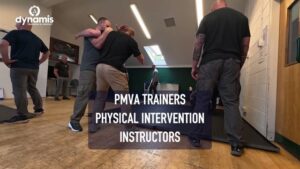

In psychiatric care, continuous professional development is not just beneficial — it’s essential. This truth was recently underscored at the University Psychiatric Clinic of Ljubljana, Slovenia, where a group of experienced nursing staff participated in an intensive 5-day training course in conflict, personal safety and physical intervention skills.
Delivered by Dynamis, the programme was commissioned in response to staff requests for more in-depth training. It aimed to equip these frontline healthcare professionals with enhanced skills to manage the most vulnerable and potentially volatile patients in the country’s psychiatric services.
What were staff perspectives on the training’s value?
From over one hour of reflective discussion post-course, the overwhelming consensus was clear: the training was not just valuable — it was transformative. Staff members consistently expressed surprise at the depth and practicality of the course, emphasising that it exceeded their expectations in numerous ways.
How did the course impact staff and exceed expectations?
A practical, hands-on approach
One of the most appreciated aspects of the training was its practical nature. Participants highlighted the hands-on scenarios and role-playing exercises that allowed them to apply theoretical knowledge in simulated real-world situations — particularly effective in reinforcing learning and building confidence.
We’d like to see more of this and maintain contact with the instructor. He really met and exceeded expectations, because we worked on practical examples, not just sitting around or looking at slides.
Ljubljana clinic staff member
Comprehensive coverage of de-escalation techniques
The course placed significant emphasis on de-escalation techniques — an area of critical importance in psychiatric care. Staff reported gaining new insights into verbal de-escalation, body language, and initial patient approach strategies.
De-escalation is, as always, the most important point. The approach, proper communication, proper posture, and facial expressions — those make a big difference. I think the most crucial is the first approach the patient sees.
Ljubljana clinic participant
Enhanced self-protection strategies
An unexpected but highly valued component of the training was the focus on self-protection techniques. Many staff members expressed that this was entirely new knowledge for them, highlighting a critical gap in their previous preparation.
This is completely new knowledge to me — this self-protection technique. We never even thought about needing to protect ourselves in such a way.
Ljubljana clinic participant
💡 The Oxygen-Mask principle: When staff feel relatively safe, they can engage more confidently to help others. Confident in their own protection, they persist longer in de-escalation, improving patient-staff relationships and reducing the need for restraint.
A patient-centred approach
The training challenged staff to shift from task-oriented care to a more patient-centred approach. This paradigm shift was eye-opening for many participants, who recognised the potential for improved patient outcomes and cooperation.
It opened our eyes to the fact that in the name of efficiency, we might be doing some things wrong, making the patient’s treatment less pleasant and them less motivated to cooperate.
Ljubljana clinic staff member
Legal and ethical considerations
Participants appreciated the course’s emphasis on legal and ethical aspects of patient care. The training provided a framework for decision-making that prioritises patient rights while ensuring staff actions are defensible in a legal context.
I really liked how we worked with the patient as if we were presenting our case in court. Always working according to the law, protecting ourselves and the patient.
Ljubljana clinic participant
What longer-term recommendations emerged?
While the immediate value of the training was clear, staff also recognised its potential for long-term impact on their practice and the broader psychiatric care system in Slovenia.
Provide regular refresher training
Many participants emphasised the need for regular refresher courses to maintain and build upon the skills learned. They drew comparisons to international best practices, noting that some psychiatric facilities require annual training for all staff.
It’s very important to keep this knowledge fresh. I was surprised when our instructor mentioned that at psychiatric hospitals in the United Kingdom, before employees even start their job, they must go through training like this, and then they refresh it every year.
Ljubljana clinic staff member
Expand training to all staff
Participants strongly recommended extending the training to all staff members, including doctors and administrative personnel — believing this would create a more cohesive, patient-centred approach across the entire facility.
For the future, I think everyone employed here should go through this. Not just the nursing staff, but the doctors too. It would prevent many incidents and injuries, and the approach to patients would become much friendlier.
Ljubljana clinic participant
Implement new protocols that emerge in training
The training highlighted areas where new protocols could enhance patient care and staff safety. Participants expressed hope that management would consider implementing some of the strategies learned during the course.
Identify continuous improvement mechanisms
Inspired by the training, staff members suggested implementing a system for continuous improvement — where they could anonymously report issues and collaborate on solutions without fear of blame.
A worthwhile investment in staff and patient care
The resoundingly positive feedback from the University Psychiatric Clinic of Ljubljana staff underscores the significant value of this 5-day training course.
By addressing crucial areas such as de-escalation techniques, self-protection strategies, patient-centred care, and legal considerations, the course has equipped these healthcare professionals with enhanced skills and renewed confidence in their ability to provide high-quality care to some of Slovenia’s most vulnerable patients.
The enthusiasm and insights shared by participants highlight the broader implications of such training initiatives — pointing to the potential for systemic improvements in psychiatric care delivery, and emphasising the need for ongoing education, protocol refinement, and a culture of continuous improvement.
We gained a lot of knowledge, but we need to keep refreshing it, especially practically.
Ljubljana clinic participant
The management’s decision to commission this course in response to staff requests demonstrates a commendable commitment to employee development and patient care quality. Such investments in staff training and empowerment will play a crucial role in shaping more effective, compassionate, and safe mental health services.