
Care assistants and caregivers consistently find that bathing is one of the flashpoints for conflict and combative behaviour with elderly residents in care — particularly those who may be confused or distressed because of the effects of dementia.
As a company that teaches physical intervention, we often get called in to talk about how staff can manage these situations. But the first thing we need to talk about is why the resident is becoming distressed at these times.
The vast majority of the work on this subject was conducted by nursing professionals in the US who studied, for well over a decade, the various approaches that care assistants and caregivers use to successfully deliver personal hygiene and skin care to older people — particularly when those people are becoming distressed.
The programme they developed is called Bathing Without a Battle, available on Amazon and other good bookstores (see the link at the end of this article). I’d recommend getting a copy for your training library. For now, I’ll walk through some of the key ideas that the book puts forward and see if we can stimulate some useful conversation.
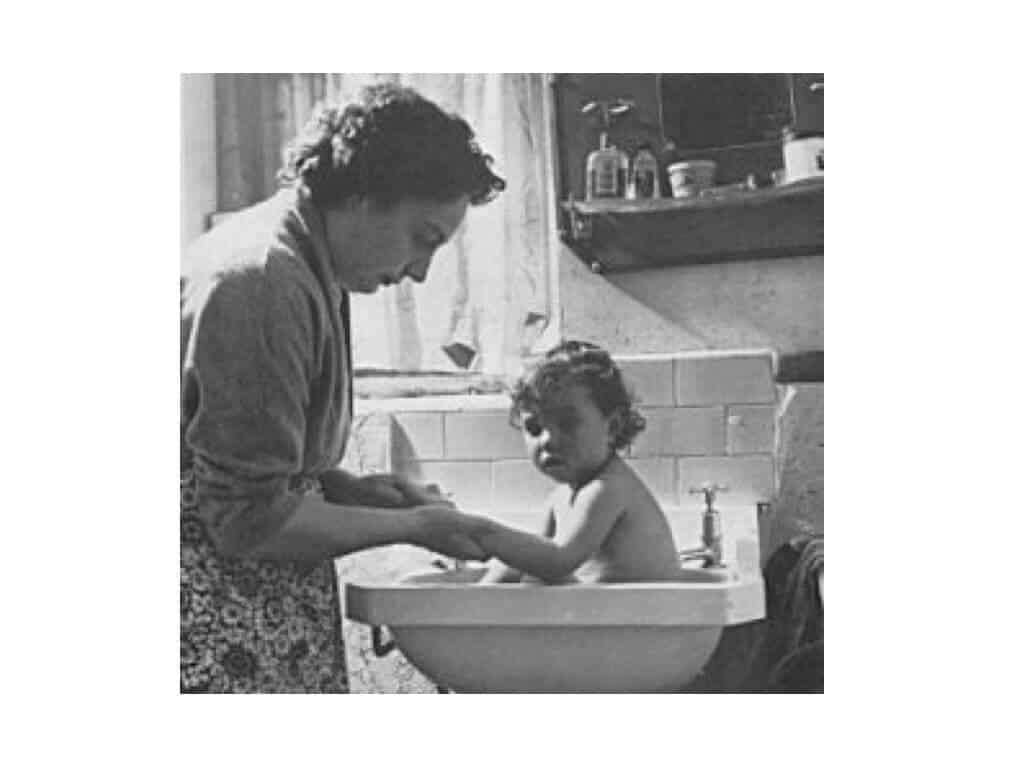
One of the most interesting threads in this programme is the exploration of what being clean really means — and what bathing has meant to people down through the ages.
For many, many years, the way people got clean was a big steel tub in the front room with the fire lit. One amount of water was poured in, and that was a communal bathing experience — everybody shared the water. For some of us, bathing has positive associations; for others, it’s never been a pleasant experience. Some residents may never have used a shower before, or their preferred method of getting clean is simply a soapy face cloth in front of the sink.
We all have different experiences of what bathing means. For some it’s positive, for some it’s negative — and for some, the preferred method of getting clean is just a soapy face cloth at the sink.
That’s one of the key issues: we need to broaden our perception of what “clean” means and what the most effective way to get somebody clean actually is.
In our Safe Caring courses, we spend time with staff exploring what their bathing environments look like, feel like, and sound like. We consistently elicit great suggestions about how to improve those environments to make them more attractive. The idea is that when an older person is invited to bathe, they perceive it as a spa-like experience — not as something aversive they’d rather avoid.
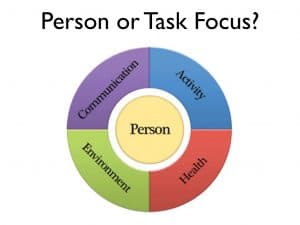
The bathing experience should be person-centred — in fact, person-directed — through knowledge of that individual’s life history, their preferences, their wants and desires, the things they’re afraid of, and the things they don’t want. We’ve got to craft a bathing experience that is attractive to our residents rather than just getting them clean or submitting them to a task we do to them. It needs to be a cooperative, collaborative experience.
💡 Key takeaway: The Bathing Without a Battle research team found that a covered, in-bed massage bath was one of the easiest and most effective ways to keep residents relaxed and cooperative during washing. The method is detailed in the book, and a demonstration DVD is available.
Engaged communication is critical. One of the key flashpoint moments is right at the very beginning — the invitation to the bath. How carefully staff approach the resident and introduce the idea that it’s time to get clean is a pivotal moment.
We discuss this with a lot of our care staff: that initial greeting, that first broaching of the subject, and whether the person feels they can connect on a human level with the person asking them.
You might have seen the NHS programme called Hello My Name Is, initiated by Dr Kate Granger, who herself was a terminally ill cancer patient. Her point was simple but profound: if care professionals would just do the basics — introducing ourselves properly, matching the pace of our activity with our residents and patients — we’d achieve more compassionate care. At the beginning of the bathing process, this foundation is essential.
⚠️ Warning: At the opposite end of the spectrum is non-engaged communication — staff talking amongst themselves, not engaging with the client about their needs, appearing distant while doing something intimate. This increases stress and is likely to trigger resistance or combativeness.
We’ve seen it ourselves in care services we’ve visited: rigid policies that make it difficult for individual carers and teams to develop person-directed bathing plans. Some care homes have strict directives about bathing days or the times of day when it happens — regardless of the resident’s preferences or state of mind.
Only when we start to become more flexible with these schedules and apply person-directed principles to the bathing task will we start seeing a reduction in those battles.

📊 Research insight: Three factors consistently drive bathing resistance in elderly care: pain, cold, and fear. If you can identify and address the causes of pain, the sources of cold and temperature change, and what’s triggering fear, you’ll see a reduction in combativeness at bath time.
The key tips that emerged from the research were refreshingly practical:
For information about our Train-the-Trainer courses in Conflict Management, Non-Escalation, De-Escalation and Crisis Intervention with our content partner Vistelar, please visit: www.dynamis.training/vistelar
Visit www.dynamis.training/safe-caring for details of our entry-level courses in personal safety for care-givers, care assistants, nurses and allied professionals who may need to work in close proximity with unpredictable elderly or other vulnerable client groups. More robust options are taught on our course for safe holding in elderly care: www.dynamis.training/safe-holding, where last-resort, protective interventions may become necessary in higher-risk scenarios.
Who this training is for:
This training enables your teams to understand and empathise with the stress-related behaviours of people living with Dementia, and to manage them by combining relevant reduced-stimulation approaches, personal safety habits, and last-resort physical protective interventions — where those are the appropriate actions to take. Your learners won’t experience a tick-box, off-the-shelf training package. Instead, they’ll receive a properly tailored, workshop-type immersive intervention that takes into account their experiences with your clients, specific to the most challenging moments they have with them.
Bathing Without a Battle on Amazon: http://amzn.eu/dq15iCY