
An innovative and significant restraint device is now available to hospitals and care services in the UK — and it deserves a serious, comprehensive exploration.
The equipment is formally known as the Emergency Response Cuff (ERC) and is sometimes referred to as the “Soft-Cuff” due to its tough-cloth construction. While sharing many characteristics with its long-standing law-enforcement cousin, the metal handcuff, this new device is an important evolution on a theme.
This restraint equipment has recently been released to healthcare and police services, following an expert medical review and the development of a comprehensive training programme. It is gaining attention — and deserved popularity — in a variety of settings.
I recently had the opportunity to spend a significant amount of time becoming familiar with, using, and observing the training of teams who are adopting the ERC. I thought my experiences might be useful to managers, trainers, and teams interested in this new development.
The Product
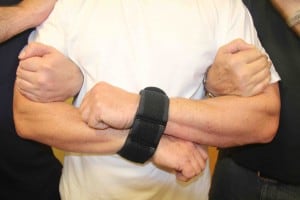
The ERC has two lengths of universal Velcro, bound and sewn together at one end where a pair of D-rings allow the tips of the compression straps to loop around and form circular enclosures.
To the touch, the fabric gives the impression of being extremely tough but also surprisingly flexible and soft. This pliability matters when applying the ERC to a subject — the ease with which staff can turn and flip the material assists smooth application.
The current model incorporates a new D-ring design, introduced to make insertion and extraction of the compression straps as simple as possible for staff. The manufacturer has also uprated the strength of the D-ring to the highest level.
On the numerous occasions when the ERC was applied to me during training, it did not leave marks — although applied with enough security to leave me under firm control. This is a key differentiator when considering the alternatives: various kinds of metal cuff, whether rigid, hinged, or chain.
Benefits Over Traditional Restraints
Whereas metal cuffs almost always leave marks and reddening — and I am aware of the potential civil claims which can result from that in my role as an expert witness — I found that the Soft-Cuffs were far less likely to do so.
This benefit — comfort and safety — emerged as one of the main features mentioned by the staff teams I encountered. Here was a potential, viable alternative to metal cuffs for clients in severe learning disability and mental health settings.
Some teams are substituting Soft-Cuffs for this purpose, increasing comfort for the patient while also removing or reducing the “police case” stigma that attends the use of metal cuffs. I overheard one evaluating team say: “This feels more like something I would use in a healthcare environment.”
A Long-Standing and Safe Pedigree
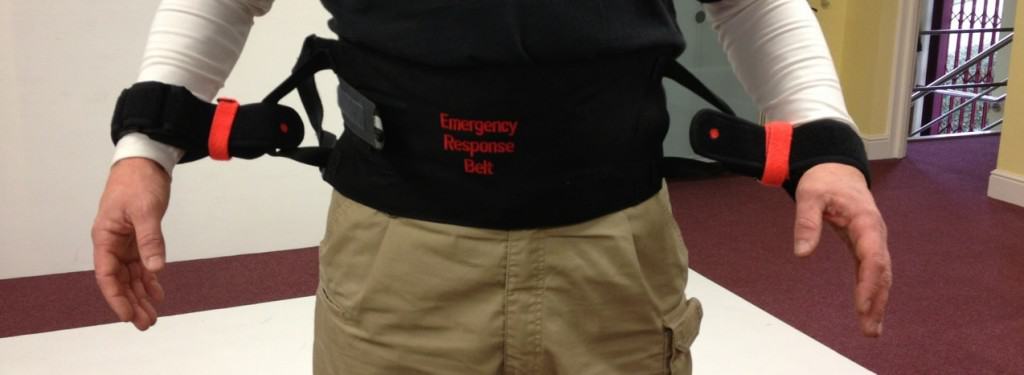
The ERC is part of a product family which started with the Emergency Response Belt (ERB), a restraint device from the USA with a very successful history. The ERB has been in use by emergency responders of all kinds to assist in the control of violent subjects for almost two decades in the UK, having first been adopted by police agencies looking for ways to control people involved in acute behavioural disturbances.
📊 Safety record: There have been no adverse incidents due to the use of the ERB. One reason is that the equipment is only released to individuals, teams, or organisations who have had accredited training in its safe and appropriate use.
Any organisation wanting to procure the ERB or ERC devices must first evidence that they have had full, accredited training from a competent ERB/ERC trainer before the equipment will be shipped. Training is accompanied by a full manual, including advice on storage and care as well as comprehensive instructional details on safe and appropriate application for different needs.
Scenarios for the Use of the ERC Soft-Cuff
First we should cover the rights and responsibilities of staff which give them the power to use force. The right to make physical interventions is enshrined in law and guidance:
- The Common Law
- The Mental Health Act
- The Mental Health Act Code of Practice
- The NICE Guidance on the Short-Term Management of Violent Behaviour
- The Mental Capacity Act
The overarching principle — the “golden thread” running through these acts and guidance — is that an intervention which limits the freedom of an at-risk person should be the least restrictive option available which achieves the legitimate aim being pursued.
In the Mental Health Act Code of Practice there are guiding principles:
15.9 — Any such intervention must be used in a way that minimises any risk to the patient’s health and safety and that causes the minimum interference to their privacy and dignity, while being consistent with the need to protect the patient and other people.
15.11 — Patients who are identified as being at risk of disturbed or violent behaviour should be given the opportunity to have their views and wishes recorded, in the form of an advance statement. They should be encouraged to identify as clearly as possible what interventions they would and would not wish to be used.
15.22 — Any physical restraint used should be used for only as long as is absolutely necessary.
In my experience of training teams in the use of the ERC, staff have been very keen to weigh and consider the appropriateness and effectiveness of the device in varied scenarios they see in their environments.
A) Reducing Risk During Transport
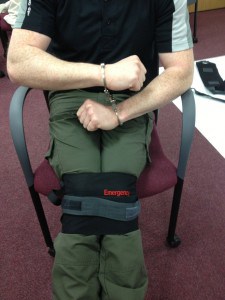
Staff have considered using the ERC in safely transporting service users from area to area, or from secure settings to non-secure settings, as an alternative to handcuffs made of metal.
Currently, in many NHS trusts, metal cuffs are used when transporting patients from secure areas to appointments in other, less-secure hospital settings. Often, metal cuffs are applied to the patient with their consent, using a front-facing palm-to-palm method. Teams frequently take additional steps to protect the dignity of service users — for instance, draping a sweatshirt or cardigan over a restraint device to keep it as unobtrusive as possible in public areas.
B) Reducing Risk of Serious Self-Harm
Staff have considered using the ERC Soft-Cuff to effectively safeguard service users who present a known risk of significant self-harm. Many parts of the NHS look after extremely vulnerable people with learning disabilities or mental illnesses. A proportion of those vulnerable people exhibit exceptional self-harming behaviours:
- Constantly putting their fingers down their throat to induce vomiting
- Striking their head against a wall at full force to deal with frustration
- Pulling hair and peeling skin from their body to reveal underlying bones and tissue
At times these behaviours can be life-threatening, or at the very least present the risk of causing serious deterioration in the person’s quality of life or health and safety. It then becomes incumbent on nurses and carers to make an intervention — if it is absolutely necessary and in that person’s best interest — to stop that harm from occurring.
In many cases, staff will legitimately use physical restraint interventions to stop or minimise the harmful consequences. A team will employ a physical holding method to immobilise the person in a way which makes it difficult or impossible for them to continue injuring themselves.
One issue which arises is that there are incidences where a team must continue to hold the person for long periods — sometimes extending to many minutes, or even hours, stretching into full shifts where staff employ a tag-team approach, swapping tiring team-members for fresh ones to maintain control.
C) Reducing Risk During Emergency Restraint
During an incident where a patient becomes extremely agitated and violent — perhaps attacking another patient or a member of staff — it is necessary to restrain them. These emergency restraint interventions can be extremely chaotic and violent. Struggles often mean the restraint ends up on the floor.
Staff in healthcare across the UK are routinely trained in how to restrain a patient on the floor — often face-down in the “prone position” — in order to gain the greatest safe control of the person in exceptionally dangerous circumstances.
The focus of much controversy, the relative safety of restraint in the prone position attracts significant attention. Prone restraint has been associated with sudden deaths of people in care. This association remains under constant examination — a controversial but persistent association rather than a definite, recognised cause. For good reason, training programmes and policies tend to seek to limit prone restraint to situations where it is an absolute last resort.
⚠️ The critical question: There are situations where staff have had to bring a person under control in the prone position. So we must ask: “Prone position, and then what?” If prone restraint is the last option, staff may have nowhere else to “go” once they have established physical control on the floor.
In some settings, staff will be authorised to use chemical control or rapid tranquilisation to influence the patient’s behaviour — often administered when the patient is prone. However, standard medications sometimes do not have the desired effect, or do not have it soon enough. The length of time it takes for rapid tranquilisation to work is measured in minutes, not seconds. And the more powerful the medication, the greater the side-effects and health problems which may result, further complicating risk control.
Given this type of scenario, it is appropriate for managers, trainers, and staff to ask: “If we could use a restraint device to reduce the risk more quickly and comfortably — should we?”
How Restraint Devices Address Risk Positively
We have looked at how staff face difficult decisions about maintaining care and control of their patients while being aware of the risks involved. Some staff, as we have seen, are exploring ways of using restraint devices such as the Emergency Response Belt (ERB) and Emergency Response Cuff (ERC) to control those risks in the best interests of the client.
We mentioned the risks from traditional metal cuffs, from prolonged manual restraint, and from the reliance on prone restraint or medication to subdue violent clients. Let me delve deeper into those risks so we can be clear on why a team might choose to use the ERB or ERC.
Some of the issues involve the employer’s duty of care obligations:
- The manual handling issues when staff engage in prolonged manual restraint of patients
- The medical and psychological considerations for the patient in prolonged manual restraint
- Care planning issues for the patient who is subject to long periods of manual restraint
- The risks attendant to the use of traditional metal cuffs
Employers are responsible under the Management of Health & Safety at Work Regulations 1999 to carry out risk assessments — so it becomes important to question the risks to everyone involved, both physical and psychological, when higher-risk interventions are required in the client’s best interests.
Issue 1: Subject Fatigue
The tragic death of Anthony Pinder in a care home in Grimsby in 2004 serves to underline the risk of prolonged restraint:
Forty-two year-old Anthony Pinder, who had learning and behavioural issues, was physically restrained for around 90 minutes by staff at the Old Vicarage nursing home in Stallingborough, near Grimsby, on 1 October 2004. He was eventually released and crawled unaided to his room, but was found dead a short time later.
Prolonged physical restraint is exhausting for the subject — whether their mental state allows them to be aware of it or not. In Police Complaints Authority guidance issued in 2002, entitled “Policing Acute Behavioural Disturbance”, the advice is stark:
The amount of time that restraint is applied is as important as the form of restraint and the position of the detainee. Prolonged restraint and prolonged struggling will result in exhaustion, possibly without subjective awareness of this, which can result in sudden death. If possible, avoid the situations in which prolonged restraint and prolonged struggling become necessary. If the person has to be restrained, avoid pressing down on the trunk. Use the limbs. Binding the ankles and wrists will be considerably safer than kneeling on the back of someone’s chest.
The combination of fatigue, prolonged struggling, physiological arousal, respiratory distress, followed by cardiac arrhythmia and arrest, is an all-too-common deadly mix seen in restraint-related sudden deaths. Violently struggling against a team of staff who are holding the client for significant time periods is an identified risk factor in these cases.
Is it possible that the use of a restraint device would significantly cut the amount of time during which the person would be struggling in a vulnerable position?
Issue 2: Staff Fatigue
We have explored subject fatigue and the position of the subject as complicating factors in safeguarding during physical interventions. But there is one more reason why a restraint device should be considered within the range of options: staff fatigue.
In the tragic case of the restraint-related death of Geoffrey Hodgkins, there is the suggestion that staff were “swapping out” due to fatigue during the long period of restraint. Prolonged restraint is known to increase the risk of sudden death for the subject — but it is often overlooked that the staff in our services are also vulnerable to the effects of sustained physical exertion.
It can be difficult, for some administrators, to imagine the sheer physical exertion necessary when frontline staff successfully carry out a restraint intervention. I am aware of at least one instance where a member of a restraint team suffered a heart attack while involved in the prone restraint of a violently struggling subject.
There exists a phenomenon in personal safety training called the Fatigue Threshold — “the sudden physical exhaustion experienced during a force encounter when a staff member cannot effectively perform to either control a person or defend himself.”
📊 Fatigue Threshold: This threshold can be reached within as little as 30 seconds — or, in the case of a very physically well-conditioned staff member, just 5 minutes. The researcher who coined this term states: “The closer an officer gets to his or her personal fatigue threshold, the more dangerous the situation becomes, not only to the officer, but often to the subject as well. You’ll do anything to avoid it, including using what may otherwise be considered excessive force.”
His advice is blunt: “Don’t figure on most people being able to hold out for more than 2 minutes or so. You don’t have much time to get a subject under control before you’re going to be in trouble.”
Is it possible that having a secure way to restrain the subject — using the mechanical advantage of Velcro straps rather than muscular exertion — would reduce the risk of reaching the fatigue threshold?
Issue 3: Prone Position — and Then What?
The prone position remains highly controversial, as evidenced by the recent storm created when MIND released the results of their Freedom of Information study about prone restraint of people in mental health care.
It is recognised that staff struggling to restrain a particularly violent individual will often end up on the floor — as confirmed in the 2002 PCA guidance:
If the person has a knife or gun, taking them down to the prone position may be absolutely necessary. However, “the prone position should be avoided if at all possible, and the period that someone is restrained in the prone position needs to be minimised.”
Additionally, the chairman of ACPO’s Self-Defence, Arrest and Control Working Group said in 2013:
“The initial control and restraint of violent individuals is usually a fluid and dynamic process, which often ends up on the floor. The reasons for this are twofold. Firstly, gravity will of course prevail in fast-moving incidents where one’s balance is often lost. Secondly, the floor is often the safest place (for all) to achieve control and subsequent restraint of a violent person.”
The issue we have in healthcare — which distinguishes it significantly from the use of force by police — is that the police will use the prone position in order to secure the individual in a set of handcuffs and other restraining devices. Healthcare staff do not typically have this final step in a Control & Restraint process.
In some healthcare environments, there is a possible resort to chemical restraint, but this option comes with significant limitations. The application of rapid tranquilisation can:
- Take a significant amount of time — measured in minutes, not seconds (see fatigue threshold above)
- Sometimes not have any or enough effect on the person’s behaviour
- If delivered in amounts sufficient to have a significant effect, put the person’s life in danger
Healthcare staff are therefore left with some less-desirable options: continue to hold the person down until they become calm, weak, or unresponsive; let the person up out of the prone hold but sacrifice the control which necessitated it; or use rapid tranquilisation which may or may not work in time to control the risk.
The report into the tragic case of psychiatric patient Geoffrey Hodgkins — who died in 2004 after being restrained on the floor in the prone position for over 25 minutes while waiting for medication to take effect — is a sobering example of this foreseeable scenario.
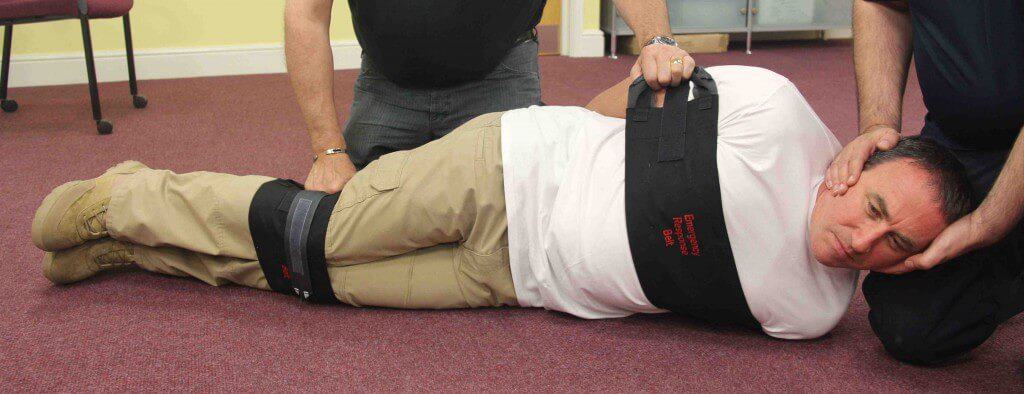
Is it possible that Soft-Cuff and ERB devices could offer healthcare staff a safer “next step” to move towards, once some control has been achieved in prone restraint?
Three Criteria for Evaluating Restraint Procedures
1. Applying Manual Handling Criteria
The physical handling of any load or person is regulated under the Manual Handling Regulations 1992. The Regulations and Associated Guidance establish a clear hierarchy of measures:
1: Avoid hazardous manual handling operations so far as is reasonably practicable — by redesigning the task or by automating or mechanising the process.
2: Make a suitable and sufficient assessment of any hazardous manual handling operations that cannot be avoided.
3: Reduce the risk of injury from those operations so far as is reasonably practicable. Particular consideration should be given to the provision of mechanical assistance. Where this is not reasonably practicable, other improvements to the task, the load, and the working environment should be explored.
The Manual Handling Regulations require that any physical intervention procedure staff use to carry out a task should be assessed in such a way as to reduce foreseeable risk.
It seems sensible that the use of a device to assist a hazardous manual handling procedure be considered in the “range of options” available to staff. Of course, staff already use a device to assist in another hazardous manual handling activity all the time — the hoist.
💡 Key point: If a hoist is considered essential for the manual handling of a person who requires lifting, why then would the use of a device to hold them during a violent episode be considered “inhumane or degrading”? Particularly when a device may reduce the time staff struggle to gain control, reduce the amount of time the person is restrained, and reduce the overall time the task takes.
The ERC and the ERB, when used in conjunction with one another, can make the movement or handling of a violently resisting person much safer because of the effect of putting “handles on the body” for moving and handling procedures.
2. Applying the Duty of Care to Staff
Some will be concerned that the use of restraint devices is against their caring ethos. They see the use of devices to restrain as somehow a “step backwards” in terms of care, or intimidating or degrading for the person concerned. Perhaps managers are even afraid that a care inspector might see them using a restraint device and decide it constitutes “abuse.”
There is a case which came to my notice early in 2013 which illustrates how the courts treat the difference between the legal obligations of employers and the “caring ethos” that sometimes clouds decision-making in the care sector.
The case was of a young woman working for Bradford NHS Trust who almost lost her sight because of the violent spitting behaviour of her client. Known to spit when frustrated and aggressive, he spat in her face one day — resulting in an eye infection which necessitated an operation to save her sight.
In the court case which ensued, her union and the prosecution lawyers successfully argued that there was no adequate system in place for recognising the risks staff faced with that service user and how best to control those risks. It was specifically mentioned that the staff should have been provided with protective equipment — eye goggles — to deal with the risk.
It takes little imagination to guess at why management had not considered the use of goggles or spit-masks. I have been involved in meetings where management and staff have discussed a variety of protective equipment to stop staff from being spat at or bitten. Always the issue arises: “Would that be a dignified or humane way to treat the service user, in line with our caring ethos?”
This case serves to remind us all that a decision not to use an “obvious” risk-control method may need to be defended in court if a situation results in harm, injury, or death.
To return to the main thread, my advice is that managers should be:
- Actively making themselves aware of risk-control methods available in their sector
- Assessing the risks facing their staff in an objective way
- Considering the use of risk-control methods while weighing their legal obligations to both staff and clients
- Objectively documenting the reasons why they have decided to use — or not use — those methods
⚠️ Caution: The choice NOT to use an available risk-control method would need to be carefully, objectively documented in a suitable and sufficient risk assessment. If the worst happens, that decision will be examined.
3. Applying the Best Interests Criteria
I often hear that a care home has a resident for whom it becomes necessary to carry out personal care when they are in bed AND they are resistant to that care.
My recommendation has always been that cleaning or caring for an actively resisting, mobile person in a bed will require five staff. My best example is the case of a client in a private hospital I work with who sometimes suffers life-threatening respiratory distress — but who violently attacks the staff who attend to him to save his life.
The procedure we teach staff for this task requires four staff to engage and hold the subject, with one staff member then able to safely carry out the personal care task. In my opinion, with a mobile person who can move their limbs freely, this is the minimum requirement to carry out the task safely.
One consideration here is that a team of five staff with a good plan can complete a cleaning task in less time, with more safety and comfort for the person, than a team of two staff can with less control and less safety. A team of five can complete the task far faster than a struggling team of two.
Staff often resist the idea that this task might need so many people. But if we ask the question: what is in the resident’s best interests? — the answer would surely be: “To be subjected to any invasive procedure for the minimal amount of time necessary.”
Is it possible that the least intrusive response to a person’s presented behaviour may be the use of a restraint device like Soft-Cuffs or the ERB?
Conclusion
I believe the ERB and ERC can serve a very useful purpose for healthcare staff facing particularly difficult decisions about how to maintain appropriate care of vulnerable people while applying the right level of control in regard to the risks they face when those clients are violent or combative.
From the point of view of staff, clients, and management, these devices should be considered carefully in light of all the information, guidance, and legalities which attend this complex area. Complex as it is, I believe there are situations in which these devices can make the care of vulnerable people both safer and more suited to individuals’ needs.
Involvement: A Final Example
I have one final example of how these devices could be both appropriate and highly useful. I recall hearing that at one NHS trust, a client with recurring episodes of violence which necessitate staff having to control him in prolonged holding — the staff asked him about these devices. They involved him in a presentation and demonstration of the device’s use, and asked for his opinion as to how they might be used to better deal with his episodes of violence.
I think it is a great example of a staff team not just being satisfied with the status quo, but actively looking for a better way — in cooperation with their client. Bravo!
Gerard O’Dea is a conflict management, personal safety, and physical interventions training consultant. He is the training director for Dynamis, a specialist provider of personal safety and violence management programmes and the European Adviser for “Verbal Defense and Influence,” a global programme which addresses the spectrum of human conflict. www.dynamis.training/