
This post is about conflict management, personal safety, and Dynamis training. Our staff writer Vanessa recently talked with Senior Trainer Zeb Glover about our Mental Health Secure Escort Training — what it is, who it’s for, and how it’s run.
What is secure escort or mental health transport work?
Dynamis secure transport clients are often private ambulance services who perform two main roles. The first is providing a patient transport service — “PTS,” as it’s commonly known. That’s a relatively simple, planned job: a patient who needs to get to an appointment or to be moved between facilities, and is cooperative.
The training we provide is typically for the other side of our client businesses: secure escort transports. This means a team has been lawfully tasked with taking a patient from one location to another — and they have a duty of care to that patient, to the public, and to themselves.
Sectioned patients and informal patients
The first type of transport involves moving a sectioned patient — somebody who has been lawfully detained for their own and others’ safety and welfare, under a section of the Mental Health Act.
There are various trips these patients need to make — for example, a hospital appointment. Our client companies provide a private ambulance service to take them, with a team who have appropriate training and authority.
The second type is when secure escorts are moving informal patients — people who are on a voluntary basis. The major difference: an informal patient has the right to change their mind. The person might say “I don’t want to go,” and the team has no lawful reason to detain them. These are some of the problems secure escort teams face in their daily work.
With a sectioned patient, the dispatcher will provide all relevant information to the staff about who they are picking up, under which section of the Mental Health Act, and any associated risks.
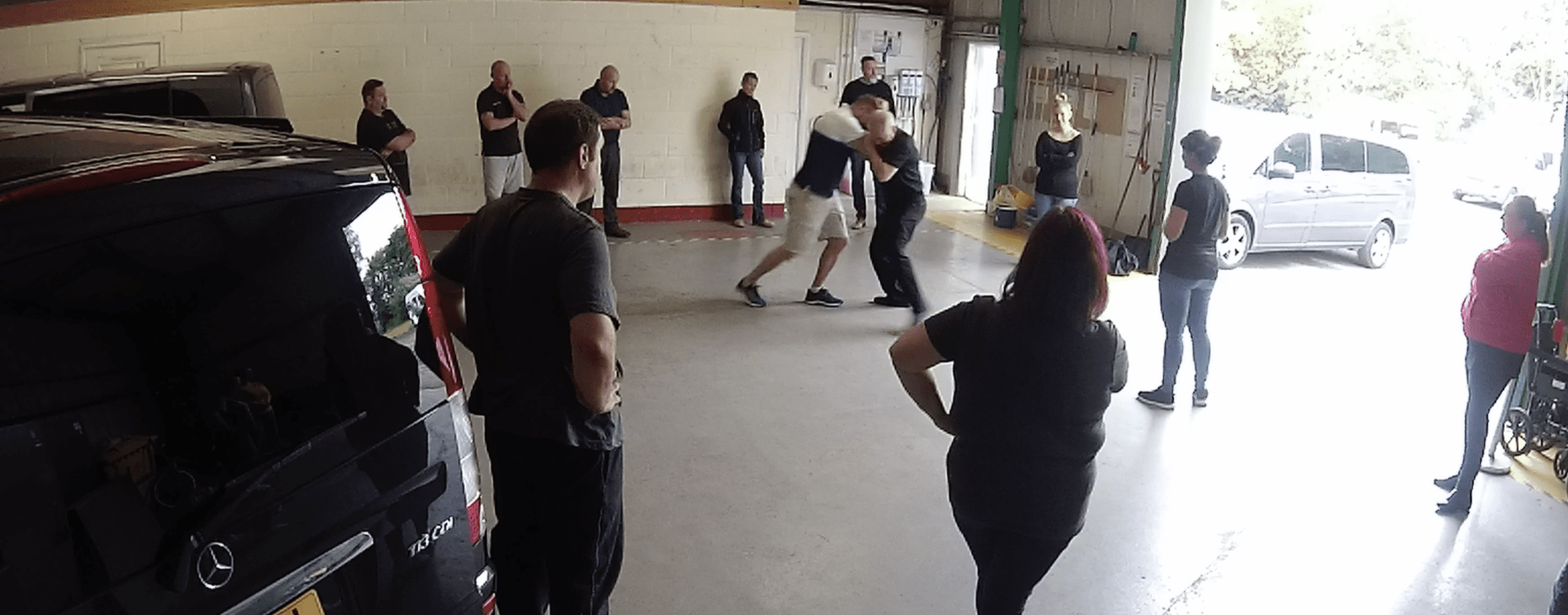
Why do secure transport teams need training in aggression and violence management?
The job role is pretty intense. Secure escort teams may be working with people who don’t have the normal inhibitors to violence that most of us in society develop.
There are two main problems: violence, and the risk of absconding.
If a sectioned patient manages to run away, the team will be in breach of its duty of care to the patient and to the public. Absconding is a serious risk, and it’s the team’s job to prevent it.
This is why, in our training needs analysis, we believe the teams need a multiple-day training course — they need to make sure everyone stays safe in a dynamic environment.
💡 Two parallel risks: Violence against the team, and absconding by the patient. Both are breaches of duty of care — to the patient, the public, and the staff themselves.
What does training for a secure escort include?
We use a well-known model called “Detect, Defuse and Defend.” When managing people with serious mental illness, you’ve got to be able to detect indicators of risk, defuse situations verbally where possible, and only then — when all other means are exhausted — defend.
There are two main ways teams can detect threat — both involve a thorough understanding of the importance of risk assessment, which we cover in the course.
Developing verbal skills is also a key part of training for secure escort teams. We teach learners how to use the “persuasion sequence” in order to defuse potentially violent incidents.
For example, informal patients may need to be persuaded to do something in their best interest — like having a painful tooth seen to by a dentist. Increasing the intensity, we might run a scenario where risk assessments indicate a patient is known for violence, so they should travel in a specialised vehicle with additional physical safeguards.
We are always aiming to de-escalate situations as rapidly as possible, using force only where we must, as a last resort. We also teach and practise the physical skills a secure escort team may have to use when — for example — all other means of achieving the safe co-operation of the violent patient have been exhausted.
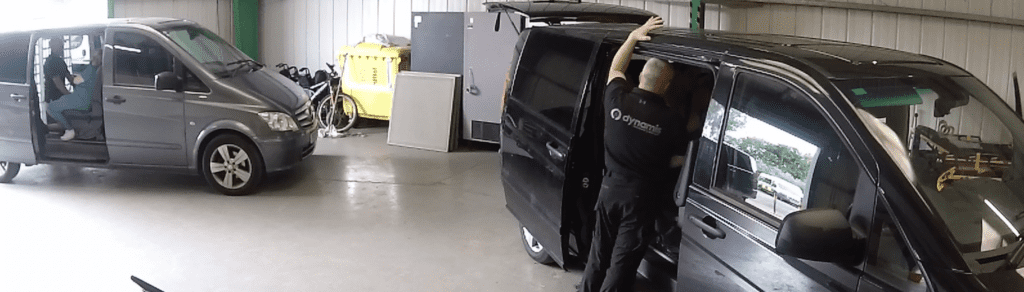
What verbal skill is most important for a secure escort team?
In our experience, the persuasion sequence is the most useful tactic for secure escort teams. When it comes to conflict and violence, prevention is obviously better than reaction.
On the first day of training, the focus is on non-escalation. We focus on how teams present themselves through using what is called the “universal greeting” — how you introduce yourself, position yourself, and open the encounter. These small things matter a lot.
Through scenario-based training, the team develops their skills in using the persuasion sequence, as well as the skills of listening, empathising, and redirecting. Then we bring in crisis management for when situations are going really badly — those situations require different management.
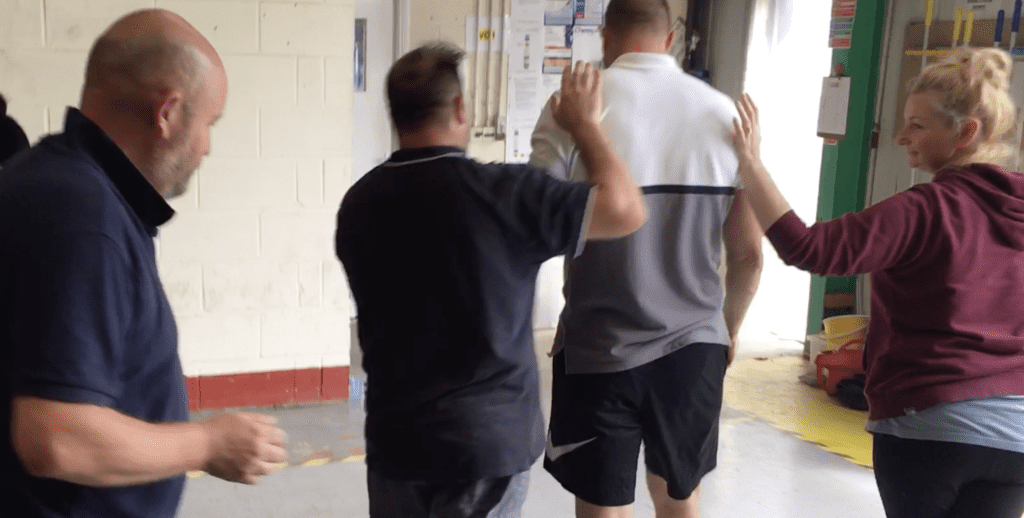
How does a secure transport team know when a situation moves to crisis management?
Crisis is when an individual is out of control of their own behaviour, to a point of dysregulation. They are not coping with the situation.
Before this, the individual may be escalating to a certain level, but their thinking brain is still working. Secure escort teams can communicate in a fairly normal way at this stage.
We delve into the “why” of this in our training course. It is important for the team to understand the nature of the behaviour — why is the individual doing what they’re doing? In the training, we focus on considering each scenario and using contextual clues to evaluate what the reason might be. If escort officers can see the individual is escalating because of a particular trigger, they can sometimes redirect.
But at the crisis point, safety overrides everything else. The main objective is no longer about building rapport and understanding — it becomes about safety and the safe resolution of the encounter.
In the training, the team practises scenarios where the emphasis changes to talking quietly, saying less, giving the individual physical space if possible, and modifying demands — for example, taking something off the table to reduce the pressure.
The average person who responds to somebody in crisis often does the opposite of these things. Because they want to help, they get really close, they talk a lot to try and reassure, they might even give the individual a reassuring touch. And that can actually make the conflict worse because it overstimulates.
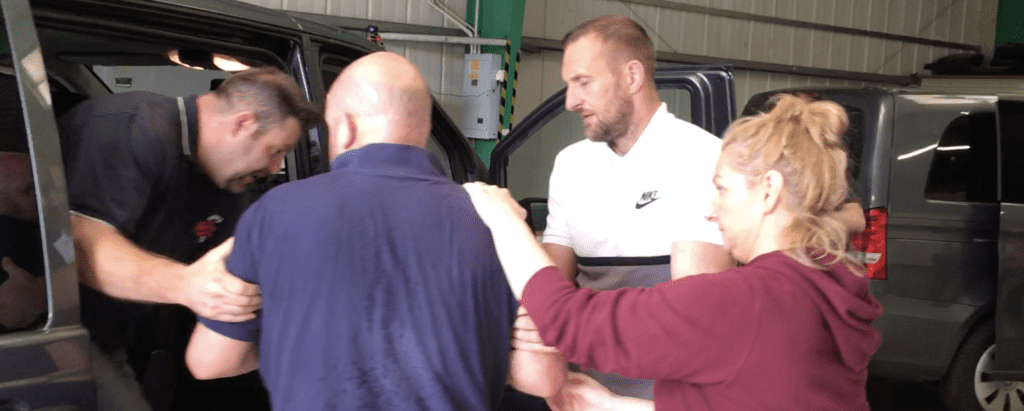
How does scenario training help secure escort teams?
When it comes to teaching conflict management, you can’t just talk about it. As Gary Klugiewicz at Vistelar says: “Are you going to talk about the fire drill — or are you going to do the fire drill?”
Practice doesn’t necessarily make perfect, but it does make permanent. The more our learners actually practise those non-escalation, de-escalation, and crisis-management skills, the more those patterns become the instinctive responses they draw on when they need them in the field.
First we go through the theory of non-escalation with learners. They practise adopting the “showtime mindset” before introducing themselves to a patient using a standardised greeting, and learn the verbal and non-verbal skills for keeping things calm.
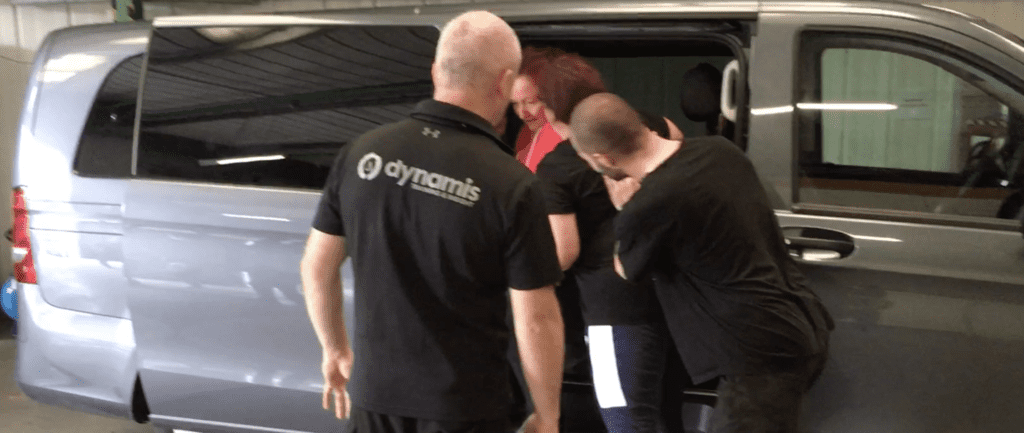
In the scenarios on module one, the patient is compliant. They say: “Okay, sure. I’ll come with you.” The team practises their positioning around the patient, and how they guide them to the vehicle. After that, the scenarios focus on managing the individual inside the vehicle, getting them out at the other end of the journey, and escorting them to where they need to be.
Then the practice of what we call closure is folded in. However the scenario plays out, the secure escort team has to complete a positive closure — so if they started with a greeting, they finish with one. The encounter closes well.
To begin with, learners know what the scenario will be and how it will run. But around halfway through module one, we introduce escort staff to the unknown — they walk into the room and don’t know what’s going to happen.
From module two, the patient behaviour becomes more challenging. Scenarios start to encompass the passively resistant patient, then the actively resistant patient.
As an example of passive resistance, escort staff may invite a patient to come with them and the patient says: “Yeah, I’ll go in a minute,” but doesn’t move. This is complicated further if the patient is informal — escort staff are not permitted to use physical force if they don’t have lawful authority.
So on module two, escort staff begin using low-level physical control methods in response to an attack or an attempt to run away.
By module three, we ratchet the risk up a level. In these scenarios, the holds from day two aren’t enough to gain control of the individual because the person is presenting a higher level of resistance or violence. From here, handcuffing is introduced as a means to reduce the amount of time the patient is in any higher-risk position, minimising the risk of medical complications during the encounter.
Finally, on module five, the scenarios are basically “freestyle.” The “patient” is briefed to display any of the behaviours covered in the training: running away, sudden violence, refusing to move, emotional crisis. The team has to read the situation and respond.
The running-away scenario often catches these teams out. The team has to work on the discipline of having their hands ready, so when something does happen their arms are in the right place to keep everyone safe and prevent the patient from absconding or hurting someone.
What kind of training is appropriate for secure escort teams?
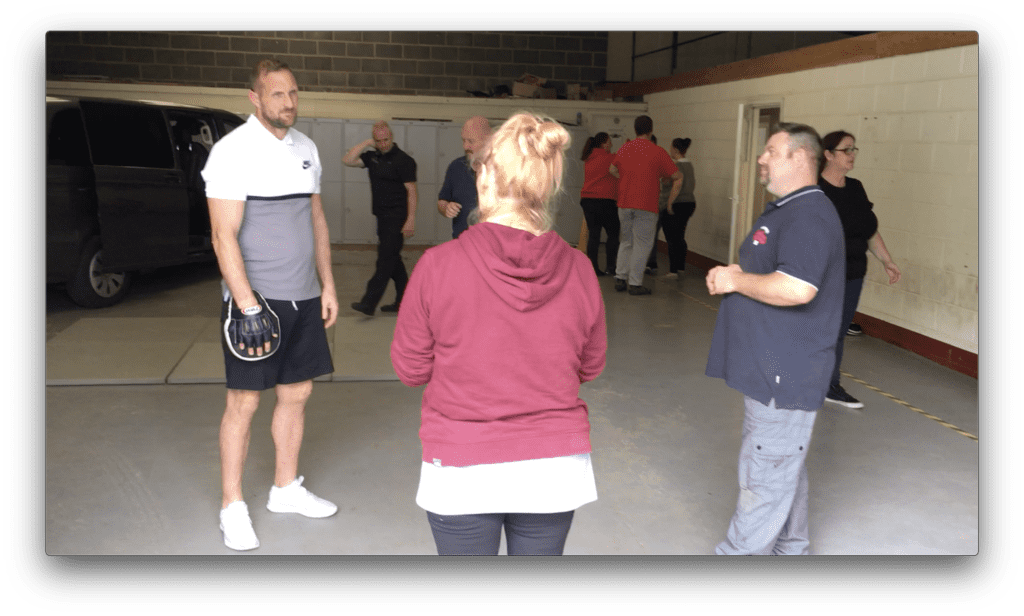
In secure escort training, we focus intensively on replicating and reacting to the behaviours staff are likely to observe in their role. When staff see behaviours they have practised, they respond more calmly and more effectively.
A big challenge is replicating the different environments for scenario training. It’s difficult to set up something to replicate the hospital, the route between the hospital and your vehicle, and the vehicle itself. We can’t do any scenario training while actually driving — but ideally we should, because in the real world issues do erupt suddenly in the back of transport vehicles.
Organisations can help enhance the training further by sourcing a venue which replicates their people’s working environment as closely as possible, within the parameters of safety. Making the training environment as “real” as possible will mean more effective practice and deeper learning — which is then more easily retrieved and put into action in live situations.
What kind of staff become secure escorts?
A lot of secure escort staff are very experienced. For example, we see ex-police officers. Others have done nightclub door-work in inner-city areas for 30 years, so they’ve seen a lot. Some come from a mental health background, or support work. Some of the younger members of staff come into the work and it may be their second ever job — they are fresh and bring their own perspectives to the training.
Our learners often appreciate the unique aspects of the Dynamis course compared to previous training they receive: the emphasis on verbal skills, the intensive scenario practice based on real experiences, and the fact that the physical skills are actually functional — they work for real. Our feedback reflects that.
Related reading
- Secure escort training feedback from frontline staff and management
- CPD: secure mental health ambulance escort team
- Secure patient transfer and mental health transport
This guide on conflict management, personal safety, and Dynamis training is part of our ongoing work with schools and academies.