
See the World Through Their Eyes

Before deciding that someone is being difficult, pause and consider what the situation might look like from their side. That is where perspective taking in conflict management starts. It does not mean agreeing with them. It does not mean excusing unsafe behaviour. It means recognising that most people resist, argue, withdraw or become aggressive for […]
The Most Underrated Tactical Skill Is Staying Relaxed

Staying relaxed under pressure can sound like the opposite of tactical readiness. It is not. In the FES 9 Attitudes framework, relaxation is the baseline. It is the state you want to live in most of the time because it gives you access to better perception, better movement, better judgement and better communication. That matters […]
Stop Teaching Awareness Like It’s Enough

“Be aware of your surroundings” is one of those phrases that sounds useful until you ask the obvious question: aware of what, exactly? That is the problem. Awareness is often presented as if it is a complete safety strategy. It is not. Awareness is only the starting point. You can be aware of the weather, […]
Treating People with Dignity Is a Safety Tactic

Dignity in conflict management is not a soft add-on — it is often one of the first practical safety decisions you make. In tense situations, people are not only reacting to the problem in front of them. They are also reacting to how they believe they are being seen, judged, spoken to, or controlled. If […]
Knife and Edged Weapon Awareness: Online Course

Knife and edged-weapon violence is a reality that frontline staff in security, care, education, housing and other community-facing roles may one day face. The most important thing they need is not a technique — it is judgement: the ability to read a situation early and make a safe decision. Our online course, Knife and Edged […]
Conflict Management Training for Retail Staff — Why It Matters in 2026 | Dynamis

Conflict Management Training for Retail: Why Shop Floor Staff Need It Now This post is about conflict management training retail. Retail conflict has changed. Shop floor staff are not only dealing with complaints about refunds, queues, stock, and service. They are dealing with theft, frustration, intoxication, abuse, threats, filming, social-media pressure, and customers who arrive […]
Breakaway Techniques for Care Workers — Skills That Actually Work | Dynamis
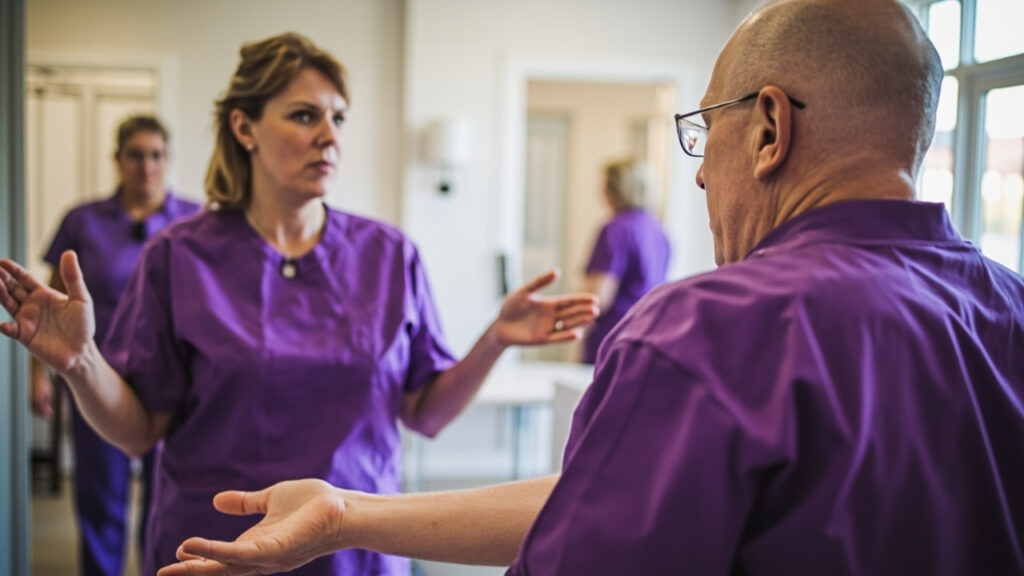
Breakaway Techniques: The Skills Every Care Worker Needs This post is about breakaway techniques for care. Breakaway training has a simple purpose: to help staff get away safely when someone grabs, holds, blocks, or assaults them. That sounds straightforward until you put it into a real care setting. A person may be frightened, confused, intoxicated, […]
Personal Safety Training UK — What It Covers in 2026 | Dynamis

Personal Safety Training: What It Actually Covers in 2026 Personal safety training is often misunderstood. Some people hear the phrase and think it means self-defence. Others imagine a half-day course with a few wrist releases, a leaflet, and a certificate at the end. Neither picture is good enough for public-facing work in 2026. For most […]
Un-common Sense in Utilities — The first ten seconds are not small talk

How utility, gas and electric engineers can read a doorstep in the first ten seconds — and turn it into a safer visit. A practical conflict-management framework for lone workers, drawing on Dynamis’ frontline safety materials. Trainer’s desk thought: the front door is a decision point. For utilities, housing, repairs and maintenance teams, the first […]
House Rules for Housebuilding — Trust is the risk environment

Why housebuilding conflict is a health-and-safety risk — not just a reputation issue. A frontline framework for sales and customer-care teams facing delays, snagging disputes and emotionally loaded buyers. Trainer’s desk thought: housebuilding conflict often starts long before the face-to-face meeting. By the time the staff member meets the customer, the customer may already feel […]