
This post is about conflict management, personal safety, and Dynamis training. It asks a hard question: how do organisations avoid the kind of culture that ends up featured on Panorama or Dispatches?
Over time, decision-making becomes culture
If more team-members spoke up, more effectively and more often, how many disasters, scandals and failures could be averted?
I was asked recently to help a team whose workplace ended up looking like a disaster-zone — because the team collectively failed to make the right decision on how to solve a problem, support a service user, and satisfy their client.
On the call with the manager of the team, I got a flashback to a chapter in Malcolm Gladwell’s book Outliers about Korean Air flight 8509 and its crash near an English village more than 20 years ago.
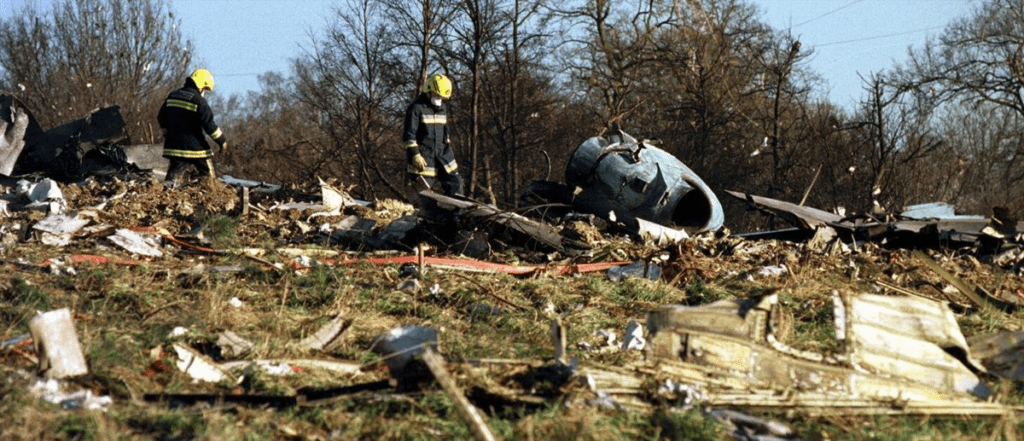
The image above shows Korean Air 8509 after its crew flew it sideways into the ground in Great Hallingbury near Stansted, on 22 December 1999.
Korean Air had more plane crashes than almost any other airline in the world for a period at the end of the 1990s. A culture based on seniority, and a lack of effective communication between the team at the critical moments when action was needed to avert a disaster, was identified as a significant cause.
One issue (among many identified) was that the first officer in the cockpit had not challenged the captain’s actions when instrumentation, warning alarms, and the flight engineer all registered that the aircraft was about to crash.
In their formal recommendations, British investigators called on Korean Air to revise its company culture and training, “to promote a more free atmosphere between the captain and the first officer.”
In the UK, we are coming to understand that poor cultures of care are consistently revealed through secret filming by BBC Panorama or Channel 4 Dispatches, resulting in a steady line of scandals — Winterbourne View, Whorlton Hall, and most recently the Edenfield Centre in Manchester.
These are environments where the team isn’t seeing the disaster looming in front of them, as they continue to work — deaf to the warning tones and blind to the flashing lights alerting them to poor ethical standards in their service.
There are at least three traps — a sort of triple-threat — which compound each other and result in these issues.
Values in action: do something
This underlines the importance of what Vistelar calls “ethical intervention” or “bystander mobilisation” — staff taking a stand based on their values and putting them into action.
In our world today, there are no innocent professional bystanders.
— Gary Klugiewicz, Vistelar
Gary recommends that staff working in any setting where difficult decisions need to be made to keep everyone safe must be prepared to act — and in all cases, must write a report which records what they observed.
Gary often references Hugh Thompson Jr., who intervened and ended the My Lai massacre in South Vietnam on 16 March 1968, saving many lives by taking decisive action against people who were otherwise his compatriots, team-mates, and brothers-in-arms.
Sometimes our colleagues make poor decisions and embark on courses of action that will lead to dark places, poor outcomes, and difficult futures. The question Gary poses: in the critical moment, what are we going to do about it?
We have shared in the past a video called “How to respond when someone spits in your partner’s face” — an example of how to incorporate ethical intervention and bystander mobilisation into your training. By getting ahead of the problem and actually practising it, we might be able to save careers, reputations, and appearances on Panorama or Dispatches.
In the moment, slow down
Sometimes events seem to take on a life of their own. Although present, staff can feel like they are being swept along in a current of activity, somehow robbed of their own agency in the moment.
The pressures of modern connected communication systems, the pressure of being observed, and the need to “be seen to do something” — a kind of professional embarrassment caused by a void in the team’s mental model — can usher teams towards a rapid decision that is rash and more likely to result in a negative outcome.
⚠️ In these situations, it is critical to “slow down”: You only get one chance to get it done right. You can be efficient, and still not be effective.
In less-dramatic settings than My Lai — the day-by-day activities of care staff, police, ambulance teams, and other public-facing professionals — decisions are made in a more mundane setting.
Poor decisions, repeated, become “the way we do business” — and before long, a toxic culture.
Don’t always follow the leader
Often we see a more experienced or more senior member of the team leading the way down a dark path. Often they are strong characters, popular with the rest of the team, perhaps even looked up to by the rookies they are leading.
The other two officers present when George Floyd was killed were “rookies, barely off probation.”
Philip Zimbardo, in The Lucifer Effect, discusses at length how social context can radically transform a normal person’s behaviour towards negative ends, and points to leadership:
In some groups we are made leaders, while in others we are reduced to being followers. We come to live up to or down to the expectations others have of us. The expectations of others often become self-fulfilling prophecies. Without realising it, we often behave in ways that confirm the beliefs others have about us.
— Philip Zimbardo
By resisting those expectations — the power of the group and the pressures of the situation — we can change outcomes.
To be a hero you have to learn to be a deviant — because you’re always going against the conformity of the group.
— Philip Zimbardo
There’s a further lesson in Zimbardo’s work about the power of calling out senior staff when they deviate from safe practice. See Atul Gawande’s The Checklist Manifesto (and his New Yorker article) for the story of checklists reducing ICU patient admissions in US hospitals.
The new rule made it clear: if doctors didn’t follow every step on the checklist, the nurses would have backup from the administration to intervene. Nurses have always had their ways of nudging a doctor into doing the right thing — from the gentle reminder to more forceful methods — but many nurses aren’t sure whether this is their place.
— Atul Gawande
Where we enable staff at all levels to check and call out safety, ethics, compassionate care, or physical intervention violations, we can be more sure that staff will do the right thing — even when managers aren’t looking over their shoulders.
A prospective hindsight approach
Perhaps another way to prevent poor decisions becoming a regime of care, or a culture of efficient ineffectiveness, is to carry out what cognitive psychologist Gary Klein refers to as a pre-mortem.
The assembled team imagines that there has already been an “adverse outcome” in their service, and makes suggestions about how it may have come about. Through this process, insights come to light about the nature of the issue in front of the team, and a better plan may emerge for how to proceed.
In healthcare environments, a pre-mortem exercise might consider:
- A named service user in our facility has died subsequent to a physical restraint intervention.
- A service user’s placement in our service has broken down and they are transferring to another service.
- A service user in our facility has ended their life while under our care.
- A service user has absconded.
This type of “red-teaming” exercise, where we try to find weaknesses in our approach and open the discussion with our team about what those weaknesses might be, helps to create a culture where voices are heard and respectful conflict is valued. It drives quality improvements and prevents our team, service, and organisation from the professional embarrassment of scandal, tragedy, or disaster.
A pre-mortem may be the best way to circumvent any need for a painful post-mortem.
— Gary Klein
Gathering up concerns
Your service will have a whistle-blowing policy, of course. OFSTED, CQC, and local authorities will have mechanisms in place for your people to report concerns about care and treatment.
We have found, however, that conflict management and physical intervention training is a really good part of induction and ongoing development — to introduce the values mentioned above, the practice of interrupting risky practices in a positive way, and one other tool: a tool that lets someone raise their hand and ask for attention to an issue.
One of our clients has successfully rolled out what might be the simplest tool for opening up communications in a service: an electronic form that any staff member can use at any time to say “I’m concerned.” They can add their name (or not) and as much detail as they wish. The concern could be about their own responses to an encounter, or about someone else’s (including a service user).
The training and development team is tasked with regularly checking the log, and then taking action on the issue raised — whether by supporting a team-mate, bringing an issue to the team meeting, or raising a concern to management. And (this is key) doing it visibly and transparently.
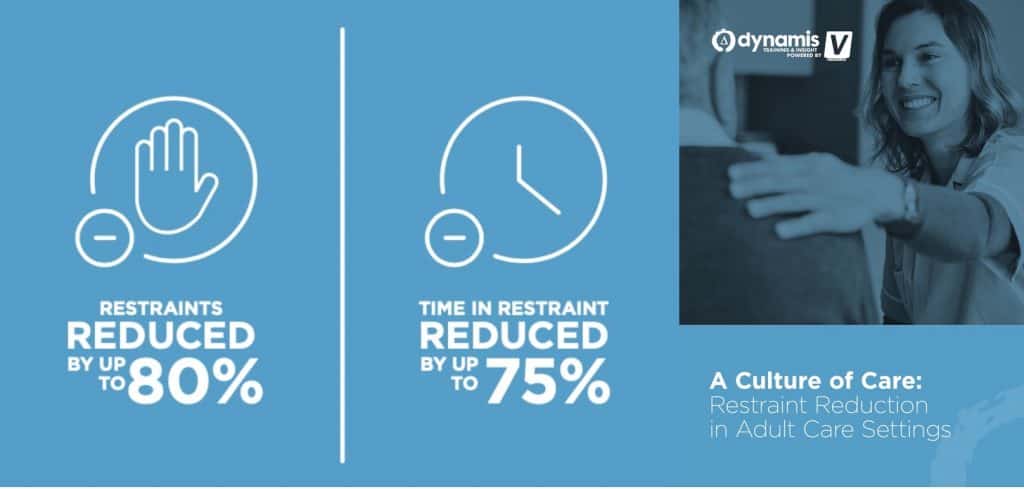
In rolling out the tool, the team transformed the service culture from one of secrecy, fear of failure, and expectations of sanction, to one where the focus is on openness and improvement. The service reduced their restrictive practices by a significant amount through this and other work on communications. To read the case study about how we helped this service reduce their reliance on restrictive practices, visit Restraint Reduction.
Gerard O’Dea is the Director of Training at Dynamis — a leading provider of conflict management, personal safety, and physical intervention training for services in the UK, Ireland, and the UAE. He is the European Representative for Vistelar, a global provider of conflict management training. In partnership with Loughborough University, Dynamis has been involved with the College of Policing’s redevelopment of Public and Personal Safety Training for police services in the UK.
This guide on conflict management, personal safety, and Dynamis training is part of our ongoing work with schools and academies.