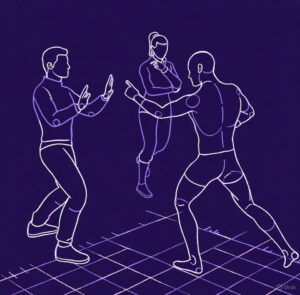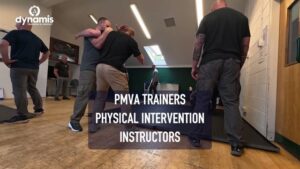

Listening in conflict is not just about hearing the words. In fact, the words may be the least reliable part of the encounter. People say “I’m fine” while their body is telling you something quite different. They may deny being angry while pacing, clenching their jaw, scanning the exits, or repeatedly glancing towards another person in the room. They may speak politely while their posture, distance, breathing or hand movement suggests the situation is becoming less stable.
So listen with all your senses. That means tone, pace, volume, pauses, facial expression, body angle, proximity, movement — and the environment around the person. It also means noticing change. Someone who starts to speak faster, step closer, go quiet, look away, or fix their gaze on a doorway may be telling you something before they can put it into words.
This is not about becoming suspicious of everything. It is about gathering better information. Good conflict management depends on noticing what is developing while there is still time to choose a calm response. If you wait until the person says exactly what they are feeling or intending, you may be waiting too long.
Listening in conflict: what the senses tell you
A useful internal check is three questions: What am I hearing? What am I seeing? What is changing? Those questions stop you getting trapped in your own reply. Many professionals listen just long enough to prepare their next sentence — and in conflict that can be risky, because the person may be giving you useful signs about fear, confusion, shame, overload, pain, or readiness to leave. If your mind is busy building a comeback, you will miss them.
Picture a resident saying, “I’m fine,” while pacing between the chair and the door, breathing quickly and refusing to sit. The words say one thing; the behaviour says another. A practitioner listening only to the words carries on with a routine conversation. A practitioner listening more fully slows the pace, gives space, reduces verbal pressure, and says: “We don’t need to rush this. Would it help if we spoke from here?”
None of that requires special equipment or a script. It requires deciding that the person in front of you is the primary source of information, and that what they are doing matters as much as what they are saying.
Listening with all your senses helps you spot risk earlier, respond to the person’s real state rather than their surface statement, and adapt before the encounter becomes harder to manage. Under pressure, that is usually the difference between a conversation that holds and one that does not.
Related reading and training
- Conflict Management
- Treating People with Dignity Is a Safety Tactic
- See the World Through Their Eyes
- Conflict resolution: persuasion and influence