
One of the biggest mistakes in personal safety is waiting too long to act because “nothing has happened yet.” That is exactly where prevention lives.
The preventive phase is the window between concern and collision — the moment when you have identified a specific risk, but before the situation has become physical. That window can be short. Sometimes it is seconds. But it is often where the safest and most professional actions are available. Prevention before the collision is rarely a technique you can see. It is a set of decisions made while they are still easy.
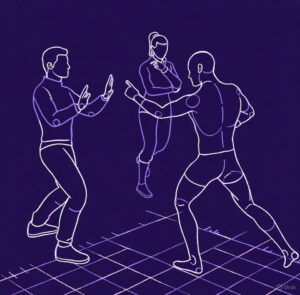
A person is raising their voice and moving closer. A parent in reception is blocking the doorway. A patient is pacing and looking past you rather than at you. A pupil is clenching fists and scanning the room. A colleague is still trying to reason with someone who is no longer processing words. Nothing has “happened” yet — but plenty is happening. Prevention starts when you treat those signs as useful information rather than background noise.
What prevention before the collision looks like
Preventive action does not need to be dramatic. In fact, the best preventive action often looks boring. Move to the open side of the desk. Create a little more distance. Position yourself so you are not trapped between the person and the wall. Bring another staff member nearby. Keep your hands visible and available. Change the conversation from persuasion to choices. Remove an audience if the audience is feeding the performance. Stop giving instructions from too close. Small moves — but they change the options.
Once physical contact begins, everything gets harder. The body is under pressure, the brain has less time, and the person may be grabbing, striking, pushing, falling or pulling. At that point, even very good training has to work inside chaos. Before contact, you can still shape the environment.
That is why “be alert and decisive” is such a useful phrase. Alertness without decisiveness becomes observation; decisiveness without alertness becomes overreaction. Put them together and you get timely, proportionate action.
For managers, this is a crucial training point. Staff should not be told to “just de-escalate” as though words were the only tool. De-escalation includes positioning, distance, exits, teamwork, timing — and knowing when a conversation is no longer helping.
A simple preventive check, worth running on any shift:
- Am I in a safe position?
- Can I leave if I need to?
- Can help see or hear me?
- Is the person closing distance?
- Is my language calming things or feeding resistance?
- What can I change now, while it is still easy?
Prevention is not cowardice. It is professionalism: doing the small thing early so you do not have to do the big thing late. If you wait until the assault begins, you have skipped the richest part of the intervention.
Reflection question: in your own setting, what is the earliest sign you have learned to trust — and what do you do when you see it?
In fact, the best preventive action often looks boring.
Related reading and training
- Personal Safety
- Awareness vs Alertness: What ‘Just Be Aware’ Gets Wrong
- The Most Underrated Tactical Skill Is Staying Relaxed
- Conflict Resolution: Be Alert and Decisive