
In addition to the issues we have previously identified in regards to residents who combatively resist efforts to assist them with personal hygiene (particularly if they have incontinence without awareness of this), one further example of the risk assessment and manual handling issue is one I often hear: a care home has a resident who requires cleaning when they are in bed — and they are resistant to that essential care.
How Many Staff Does It Take?
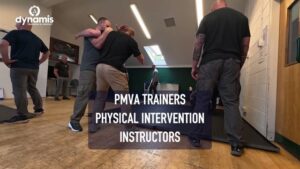
My recommendation has always been that cleaning or caring for a mobile person in a bed who is actively resisting those efforts — if it becomes absolutely necessary to do so — will require perhaps as many as five staff to accomplish it using physical holding.
The procedure we might suggest to staff for this kind of scenario could require four staff to safely hold the subject, which then allows one staff member to safely carry out the personal hygiene care.
💡 Key takeaway: With a mobile person who can move their limbs freely, five staff is the minimum requirement to carry out the task with maximum safety, minimum disruption time, and the appropriate level of professionalism.
Why More Staff Means Less Distress
One major consideration is that a team of five staff with a good plan can complete the cleaning task in less time, with more safety and comfort for the person, than a team of two staff with less control and less safety.
A team of five staff can get “back on the floor” far faster than a struggling team of two — and leave the client less distressed, more comfortable, and safer.
What is in the resident’s best interests? I think the answer would be: “To be subjected to any intrusive procedure for the minimum amount of time possible.”
Staff often resist the idea that this task might need so many people. But if we ask the question — what is in the resident’s best interests? — the answer is clear. From both perspectives — staff time-on-task and resident time-in-discomfort — we must consider how the team will achieve their task where other, non-physical options have been exhausted.
About the Author
Gerard O’Dea is a conflict management, personal safety, and physical interventions training consultant. He is the training director for Dynamis, a specialist provider of personal safety and violence management programmes and the European Adviser for ‘Verbal Defense and Influence’, a global programme which addresses the spectrum of human conflict. www.dynamis.training/