
Personal Safety Training UK — What It Covers in 2026 | Dynamis

Personal Safety Training: What It Actually Covers in 2026 Personal safety training is often misunderstood. Some people hear the phrase and think it means self-defence. Others imagine a half-day course with a few wrist releases, a leaflet, and a certificate at the end. Neither picture is good enough for public-facing work in 2026. For most […]
Un-common Sense in Utilities — The first ten seconds are not small talk

How utility, gas and electric engineers can read a doorstep in the first ten seconds — and turn it into a safer visit. A practical conflict-management framework for lone workers, drawing on Dynamis’ frontline safety materials. Trainer’s desk thought: the front door is a decision point. For utilities, housing, repairs and maintenance teams, the first […]
Conflict Resolution Listening Skills
Conflict Resolution Listening Skills Getting to the Heart of the Problem Conflict Resolution Listening Skills are the means by which we gather the information we need to de-escalate a distressed person, through understanding their needs and what is driving them. People who are upset or angry or tired or frustrated or stressed out, they don’t […]
Conflict Resolution Greetings and Initial Contacts
Conflict Resolution Greetings Starting the Interaction with Non-Escalation Conflict Resolution Greetings are how we achieve non-escalation by shaping the initial contact with the other person carefully and sensitively. It’s an unfortunate fact about human beings that we make snap judgments about others. We get an initial impression about a situation or a person and that […]
Conflict Resolution Mindset for Success
Your Conflict Resolution Mindset Keeping Your Emotional Equilibrium Under Pressure Your Conflict Resolution Mindset can have a major impact on the outcome of an interaction because how you feel affects how you interact with others. Gerard O’Dea is a conflict management, personal safety and physical interventions training consultant. He is the training director for Dynamis, […]
Hospital Violence Reduction and SCARF Triggers
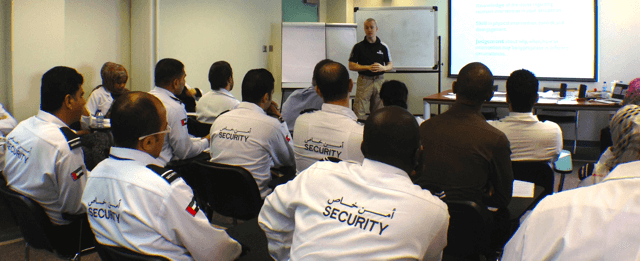
Hospital violence reduction usually starts with the environment, not the patient. Why do patients and visitors become aggressive in emergency departments? Often, the answer lies not in the individual but in the environment — and how staff manage the five core social triggers first identified by neuroscience. The Information Gap In a MORI opinion poll, […]
Care Home Safe Holding: Issues in Managing Distress in Dementia Care
Time and again, caregiving staff in services for older people describe scenarios where they believe fundamental safety and care processes have broken down. Across the many care homes we work with, six concerns surface repeatedly. What Care Home Staff Are Reporting 1. Inadequate pre-admission assessment. The resident’s care needs and previously reported challenging behaviour or […]
Hospital Violence Reduction – Legislative Landscape
There is a trend in many countries to bring into play specific legislation which seeks to protect public services workers from crimes of violence and aggression committed against them. Often this legislation places higher sentencing tariffs for crimes of assault against emergency services workers. While undoubtedly a control measure which primarily seeks to deter acts […]
Hospital Violence Reduction – Organisational Commitment
Leadership Commitment to the Hospital Violence Reduction Project Sometimes in the hospitals we visit, nursing staff do not feel that they have the full support of the organisation in managing incidents of violence or aggression in their work — even though there is an active Hospital Violence Reduction Project in play. This is underlined by […]
Impact Factors in Hospital Violence Reduction
Impact Factors in Hospital Violence The following causal factors are based on the US Occupational Health and Safety Administration’s (OSHA) analysis of risk factors for violence in hospital services. Use of hospitals by police and criminal justice agencies for criminal holds and the care of acutely disturbed persons Acute and Chronic mental health patients The […]