
De-Escalation

Facing an aggressive person, words and body language have to do two jobs at once, dissuading violence while improving your own position. The post covers pre-cues, proximity, fact versus opinion and the barrier signal.
Patient Care and Compassion in conflict resolution training
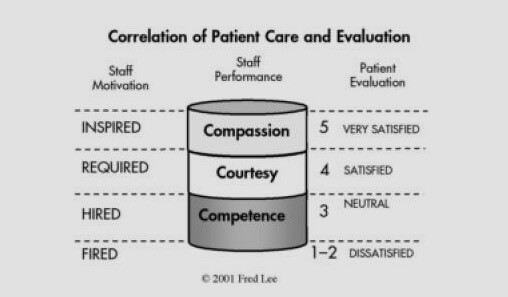
Drawing on Fred Lee’s three levels of care, competence, courtesy and compassion, the piece argues that NHS conflict training should align staff actions with their values, since compassion cannot be hired or required.
Patient Satisfaction: Conflict Resolution training for the NHS teaches this largely unknown concept!

Drawing on Fred Lee’s argument that clinical outcomes alone do not satisfy patients, the post explains how the Peace Story technique helps NHS staff notice chances to show spontaneous compassion.
Great Conflict Resolution training in the NHS would include this key idea

Consistency between frontline staff and patients matters, the post argues. Pre-practised opening scripts feel compassionate rather than stiff when they are built around respect, dignity and empathy.
How to be unbiased when approaching a patient

On being unbiased when approaching a patient, the post borrows the Showtime idea from Verbal Defense and Influence. Staff are performers who are always communicating, so consistency becomes the professional standard.
An essential component of an NHS De Escalation course

An NHS de-escalation course should balance non-escalation, de-escalation and physical alternatives, and hold empathy and dignity throughout. The post explains what compassion looks like in practice, drawing on Fred Lee.
Conflict Management in Edinburgh -based Community Charity

Training for a national homelessness outreach charity in Edinburgh covered non-escalation, de-escalation, crisis management and support for people with cognitive difficulties. The post describes the Vistelar-based approach and includes a video of the strategies.
Safe Holding Training – Manage Distress – Scotland
A video in which Gerard O’Dea answers a question about how Scottish care homes should respond to distressed or dangerous behaviour in older people, relating safe holding practice to existing guidance and statute.
Conflict Resolution Persuasion

Four steps make up the Persuasion Sequence, a way of gaining voluntary compliance, cooperation or collaboration from a resistant person, covering asking, setting context, offering options and a second chance.
Conflict Resolution Redirections

Gerard O’Dea explains redirections, a conflict resolution strategy for steering a conversation back on course when someone is abusive or disruptive. He describes serious, apology, timeout, polite threat, humorous and bystander versions.