
Report – Responding to Behaviours of Concern in Irish Schools

Evidence from over 2,600 staff across 124 schools underpins a Dynamis report describing how often behaviours of concern arise, their impact, and where training, leadership, legal clarity and coordination already help.
NHS conflict resolution training: using the framework well, then building beyond it

NHS conflict resolution training gives staff shared language and a baseline, but the post argues that a framework is not capability. It looks at where CRT falls short and what a context-specific programme involves.
12 Practical Ways Teams can Reduce Conflict
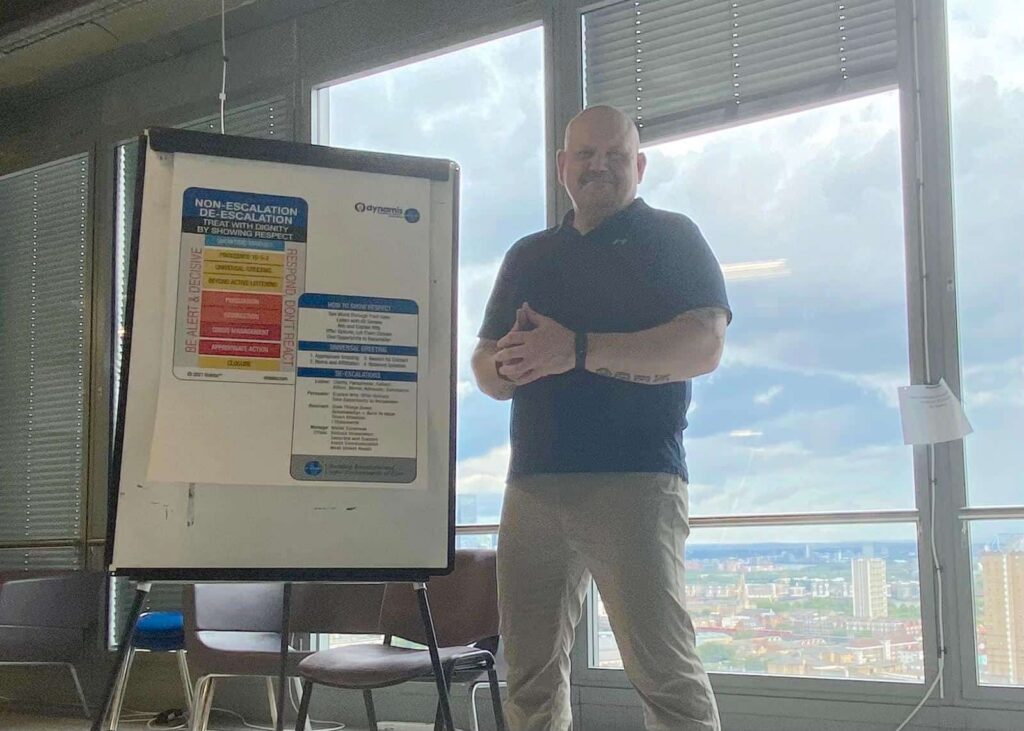
Twelve practical tactics teams use to reduce conflict, starting with dignity and respect, and covering listening, persuasion, handling intimidation and maintaining a social contract, in a climate of high expectations.
Utilities and Services – confidence that our people are doing the right thing during conflict management
Jason Campbell, a senior security leader at NiSource, describes how Vistelar conflict management training gave technicians and guards across seven states a consistent framework, and why practice beats lecture.
Reducing Hospital Violence through Training

Jeff Mehring, who oversaw security across eight hospitals, describes moving his teams from reactive de-escalation to proactive non-escalation. Security contacts rose while physical interventions fell, because staff engaged earlier in situations.
Conflict Management Trainer Course – December 2019
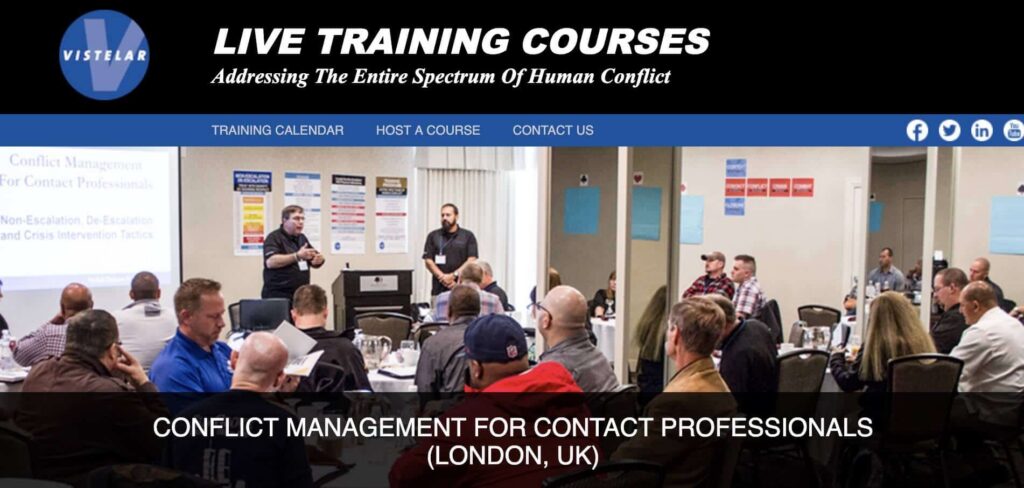
A five-day Vistelar train-the-trainer course coming to the UK, covering non-escalation, de-escalation and crisis intervention through the Six Cs, with scenario practice and video review but no physical control tactics.
How to show people respect during conflict

Vistelar’s Gary Klugiewicz explains the Treat People Right card, which sets out five ways to show respect during conflict and an empathy triad of acknowledge, understand and anticipate, framed as a professional defence.
Evidence based training approach: SCENA
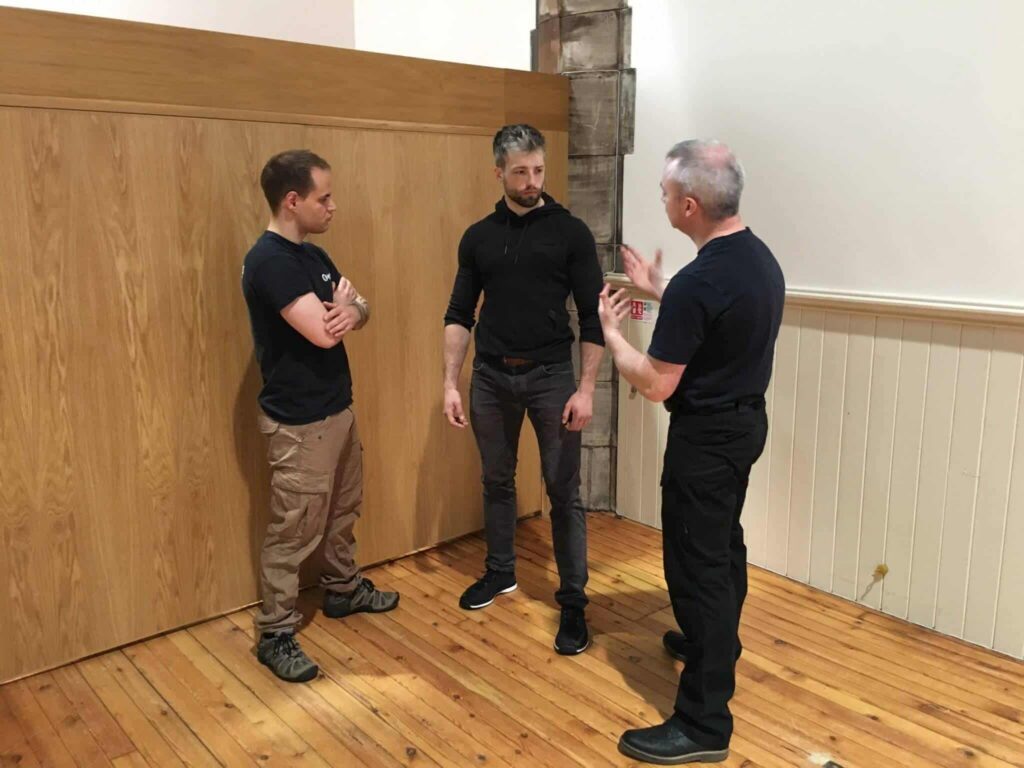
Training that breaks conflict management into simple drills can produce performance in the room without lasting learning. The post explains the difference between learning and performance, and why context in practice matters.
How to end a conflict

Closure is the last of Vistelar’s six Cs, and the post sets out a sequence of emotional reassurance, orienting questions and a physical check, warning that relaxing too soon can be dangerous.
Crisis Intervention in Policing
A conversation with police trainer Gary Klugiewicz about the confidence gap in crisis intervention. His argument is that confidence follows competence, built by practising and being shown how, because officers have seconds to decide.